



**Start free creator sign-up today →
Seven days is enough to publish your first affiliate post and start tracking clicks. If you want to start affiliate marketing beginner in 2026, do this: pick one problem-focused niche, choose one platform, join one network, publish one helpful review, disclose links, drive traffic, and measure results.
Here’s the honest part. Your first dollar might take weeks. Your first hundred might take 60–90 days. But your path is simple and repeatable. I’ll show you the exact steps, the traps that stall new creators, and a one-week launch plan you can follow without guesswork.
By the end, you’ll know what works, what to skip, and how to avoid rookie mistakes that waste months. You’ll also see the tools I use and how they fit together, from link tracking to disclosure rules that keep you out of trouble in 2026.

What Is Affiliate Marketing and How Does It Actually Work?
Affiliate marketing is a simple referral system: you recommend a product and earn a cut when someone buys or completes a goal through your unique link. Three parties are in play, merchant, affiliate, and consumer, and each one has a clear role.
- Merchant: the brand selling the product (for example, a software company).
- Affiliate: you, the publisher or creator who shares the link.
- Consumer: the person who clicks, then buys, signs up, or takes the desired action.
Think of it like a coffee shop punch card with a twist. If you send a friend to a local roaster and they buy a bag, the owner slips you a thank-you fee. Online, software “tags” track that referral, and the brand pays you based on rules you both agreed to upfront. For a neutral overview, see Affiliate marketing (Wikipedia).
Commission Models You’ll See
Different goals pay in different ways.
- CPS (Cost Per Sale): You earn a percentage of the sale price. Example: 10% on a $60 item.
- CPA (Cost Per Action): You earn a flat fee when a buyer completes a goal (e.g., installs an app).
- CPL (Cost Per Lead): You get paid for qualified leads, like a valid email or demo booking.
Tracking works through cookies, pixels, or server-side tracking. Your network or the merchant’s program gives you a unique link. When a reader clicks, the platform attributes the result to you. For a start affiliate marketing beginner plan, your job is to choose offers that match your audience’s intent, then create content that answers their questions before they even ask.
A Quick Real-World Analogy
Picture a bike shop that pays $25 when your referral buys a helmet within 7 days. You hand out a card with your name on it. Online, your “card” is a link; the “7 days” is the cookie window. Same idea, just coded.
How to Start Affiliate Marketing Step by Step
You don’t need a big audience. You need a tight plan you can repeat. Follow these seven steps to publish your first piece this week and set yourself up for month two and three.
Step 1: Pick a niche you can serve for 12 weeks
Choose a narrow, problem-led space you can write or film about without stalling.
- “Home coffee gear under $200”
- “Beginner trail running shoes”
- “Budget SaaS tools for freelancers”
Ask: What problem am I solving? Who is the buyer? Where do they hang out? Write that down. For a start affiliate marketing beginner setup, clarity beats size.
Step 2: Choose one platform (blog, YouTube, or social)
Pick one primary home:
- Blog/website: great for evergreen search. Use WordPress on a fast host.
- YouTube: ideal for reviews and tutorials. Aim for 6–10 minute videos early on.
- Social (Instagram, TikTok, Pinterest): short-form reach, but link placement varies.
Commit to a cadence: two posts or one video per week for 12 weeks. Consistency compounds.
Step 3: Join one affiliate network or brand program
Start simple:
- Amazon Associates, ShareASale, CJ Affiliate, Impact
Sign up, complete tax forms, and read program rules. Note cookie windows, payout minimums, and any restricted claims (e.g., price references). One approval is enough to launch this week.
Step 4: Create valuable content that solves, then sells
Lead with help.
- Problem: What the reader struggles with.
- Short answer: The fix in one or two lines.
- Proof: Hands-on notes, tests, photos, or a demo.
- Picks: 1–3 products that fit clear use-cases.
- Next step: Nudge to act, without hype.
Add comparison points buyers care about: size, fit, battery life, phone support, refund rules. If you don’t own the item, say so, and cite sources. Honesty builds trust.
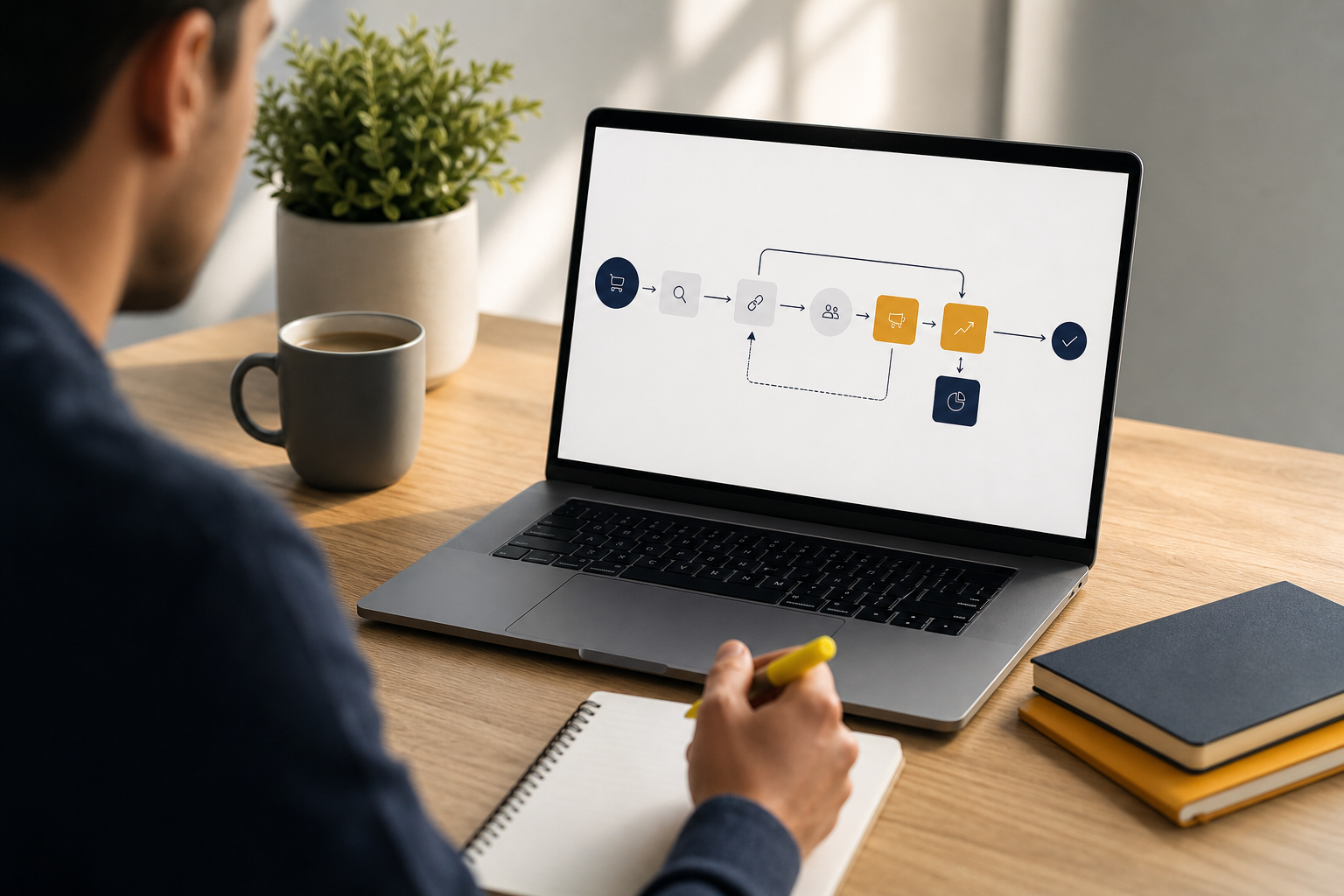
Step 5: Add affiliate links naturally and label them
Place links where they help: near the pick, once in the intro, and once in a “Where to buy” section. Use clear link text like “See price at Retailer” instead of vague “click here.” For SEO, qualify paid links with rel="sponsored" as explained by Google Search Central. Also add nofollow if your network asks for it.
Add a short disclosure near the top and again before your links. Keep it plain: “This post contains affiliate links. I may earn a commission if you buy through them at no extra cost to you.
Step 6: Drive targeted traffic
Start with search intent. Target terms like “Product X review,” “Product X vs Product Y,” or “Best X for Y.” If you’re on YouTube, front-load benefits in the first 15 seconds and add chapters. On social, share short clips that tease the main review and pin a comment with your disclosure.
Set a simple goal for your first 30 days: publish 4–6 assets and reach 100 qualified clicks. That’s enough data to learn.
Step 7: Track and improve
Install Google Analytics on your site and a link manager like ThirstyAffiliates to organize and tag links. In your network dashboard, watch clicks, EPC (earnings per click), and top-converting assets. Double down on what brings results. Update winning posts with clearer CTAs, better images, or fresher picks.
For a start affiliate marketing beginner plan, improve one variable per week: title, intro hook, comparison table, or product lineup. Small moves stack up.
**See pricing (free signup) →
Also Read!
How to Become a UGC Creator in 2026: A Complete Beginner’s Guide
How to Join and Earn From the SHEIN Affiliate Program in 2026
5 Common Affiliate Marketing Mistakes Beginners Make
New affiliates don’t fail from lack of hustle. They fail from fuzzy focus and skipped basics. Here are the traps I see again and again, plus precise fixes you can apply today.
1) Promoting too many products at once
Problem: Ten links, zero trust. A grab-bag reads like noise.
Fix: Pick 1–3 products per post with clear use-cases: best budget, best mid-tier, best premium. Build depth, not bloat. For a start affiliate marketing beginner cadence, one tight pick list wins.
2) Ignoring disclosure rules
Problem: Hiding links breaks trust and can break the law.
Fix: Use simple, upfront disclosures on every post and profile. The FTC’s Endorsement Guides explain what “clear and conspicuous” means. Put disclosures where people will see them, not buried in the footer.
3) Chasing high commissions that don’t fit your audience
Problem: A 40% payout sounds great, until your readers don’t care.
Fix: Start with audience-product fit. If your channel is about hiking, a cloud accounting product won’t land. Choose offers your readers already want.
4) Not tracking performance
Problem: You’re “busy” but blind.
Fix: Tag links by post and placement. Check clicks weekly. If a post gets traffic yet zero sales, tighten the pick, add FAQs, or test a comparison table.
5) Expecting overnight income
Problem: You quit on day 20.
Fix: Set time-bound goals you can control: publish two posts per week for 12 weeks. Results lag action. Keep going, measure, then edit the plan, not your commitment.
Add one more guardrail: avoid thin, AI-style content. Share real use, your own photos, or at least tight summaries from hands-on reviews you cite and credit.
Best Tools and Platforms to Support Your Affiliate Marketing
You only need a few tools to start strong, then add more as you grow. Build a stack that covers content, links, and analytics without dragging you into tool-shopping loops.
WordPress plus a fast, secure theme handles blogs well. For visuals, Canva is enough to make clean hero images and comparison graphics. For analytics, use Google Analytics and a link manager such as ThirstyAffiliates to tag, organize, and redirect clean links. For networks, start with Amazon Associates, ShareASale, CJ Affiliate, or Impact; they cover thousands of programs under one login.
For creator-led campaigns that blend content and reach, one option to explore is Infliuence. It’s an AI-powered platform that connects brands with influencers, includes real-time performance tracking and analytics, and even supports direct payments to influencers based on generated views. Trusted by 50,000+ brands and creators, most users are Live within 24 hours, and signing up is completely free. Recent campaigns highlight scale and quality: the Olay Skincare Summer Campaign reached 1.02M views with an 84% approval rate, and a Burger King Food Creator Campaign hit 954k views with a 73% approval rate.
“Sales spiked 40% in the first month, all through relatable reels.” — Pulse Energy
If you’re a start affiliate marketing beginner choosing where to invest first, spend on hosting and audio (for video). Free tools plus discipline beat pricey software you barely touch.
What to Do This Week to Launch Your First Affiliate Campaign
You don’t need a perfect brand kit to begin. You need seven focused days. Here’s a plan you can follow without guesswork.
- Day 1–2: Niche research. List 3 candidate niches. Validate each with 5–10 search terms (e.g., “best X for Y”, “X vs Y”, “X review”). Pick one.
- Day 3: Join one network (Amazon Associates, ShareASale, CJ Affiliate, or Impact). Complete tax forms and read linking rules.
- Day 4–5: Create your first asset. Write a 1,000–1,500-word review or record a 6–10 minute video. Use your outline and add 2–3 original photos or screen grabs.
- Day 6: Add affiliate links and disclosures. Use rel="sponsored", a clear in-post disclosure, and a short “Where to buy” box.
- Day 7: Publish and share. Post in one relevant community you’re active in. Add a short clip or image to social that points back to the full review.
Set a 30-day target: publish 4 assets and reach 100 qualified clicks. Then iterate on what worked. For a start affiliate marketing beginner push, that simple loop, publish, measure, improve, beats any hack you’ll see on social.
**Get free creator access today →

Key Takeaways
- Start narrow, serve a real problem, and commit to 12 weeks of output.
- Disclose clearly, label links as sponsored, and write like you’d talk to a friend.
- Track clicks by asset and placement; improve one variable per week.
- Use a light tool stack: WordPress, Canva, Google Analytics, and one network.
- If you need creator-brand matching and fast launch, platforms with AI matching and real-time analytics can help you scale responsibly.