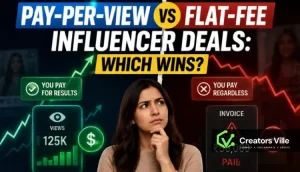



For e-commerce teams, influencer campaign analytics and ROI tracking must turn creator content into defensible revenue proof, not vanity metrics. Start Free. Track ROI → to ground your next launch in clear source-of-truth reporting. Then, bring it home with proof: “Trusted by 50,000+ brands and creators” is more than a badge; it signals real usage at scale. The Olay campaign reached 1.02M views with an 84% approval rate, while a Burger King food creator push brought in 954k views at a 73% approval rate.
Moreover, you need speed. Most users are Live within 24 hours on tools built for e-commerce, which means you can start tracking your next launch this week, not next quarter. The goal here is simple: convert content into revenue with less waste and better proof. That means combining UTM links, unique discount codes, platform pixels, and first-party checkout data so you can attribute add-to-carts, purchases, and repeat orders to specific creators and posts, even when buyers take multi-touch paths across TikTok, Instagram, Shorts, and your mobile site.
As channels converge in 2026, the best stacks also capture alternate paths to purchase such as creator storefronts, QR codes in Stories and Reels, live shopping events, and affiliate deep links that open directly into native apps. When those signals sync to server-side events and your order system, you can track delayed purchases, cross-device journeys, and even subscription conversions with the same rigor as single-click checkouts.

Why E-Commerce Brands Struggle to Measure Influencer Campaign ROI
Attribution breaks when the buyer’s path splinters. A shopper sees a TikTok, reads an Instagram caption, clicks a Story, then buys from a saved mobile browser, all in two days. Without strong tagging and a shared dashboard, the clicks look like chaos. You see likes and views, but you can’t link those touchpoints to orders or repeat buys. That’s why you need influencer campaign analytics and roi tracking you can trust, not just a pretty recap.
In addition, teams get stuck chasing surface metrics. Reach looks big. Comments feel good. But finance needs cost-per-view, cost-per-acquisition, and return on ad spend, mapped to creators and posts. If your tools can’t convert content metrics into order and revenue metrics, the channel stalls at “brand awareness” even when it could carry real sales.
Siloed data is the next trap. Social platforms, payment processors, and your store show different clocks and IDs. Therefore, UTM-only tracking will miss view-throughs and last-touch steals, and spreadsheets can’t fix misaligned time zones or missing posts. The result is slow, debated reports that arrive after the chance to act has passed.
Moreover, approval and compliance loops are messy. If legal lives in email, approvals lag. If payouts are manual, creators wait and morale dips. Those frictions reduce post volume, shrink test size, and block lift tests. As a result, your read on “what works” never stabilizes, and forecasts wobble.
Privacy and platform shifts compound the issue. Between browser restrictions, GA4 changes, iOS link tracking protection, and cookie deprecation, over-reliance on last-click web analytics erodes signal. To preserve visibility, modern stacks blend server-side events, coupon-level attribution, platform commerce data (e. g., TikTok Shop), and modeled lift. When those inputs roll up to a single dashboard, you can reconcile impression-level influence with checkout-confirmed sales and LTV, without arguing over which clock was “right.
Cross-border sales add another wrinkle. Currency conversion, multi-language storefronts, and country-specific discount rules can skew ROI unless your analytics normalize exchange rates, tax treatments, and shipping costs by region. The longer those discrepancies go unresolved, the harder it is to compare creators across markets and make timely reallocation decisions.
Common Pitfalls In Tracking
- Last-click bias hides upper-funnel creator value.
- UTM tags break across Stories, Reels, and creator reposts.
- Vanity metrics crowd out sales and lift.
- Manual payouts slow cycles and reduce creator trust.
- Post approvals sprawl across email and DMs.
- Mixed time zones and inconsistent campaign naming corrupt rollups.
- Discount code cannibalization (stacked promos) muddies source truth unless deduped.
- Ignoring post decay curves leads to underfunding evergreen creators who compound over weeks.
“Experience one of its kind influencer marketing—connect with verified influencers, track real-time performance, and gain data-driven insights to build long-term, transparent relationships. No middlemen, no hidden fees.” — Infliuence user
To get unstuck, align on a few non-negotiables: a shared taxonomy (consistent campaign and creator naming), enforced UTM standards, auto-capture for reposts and story frames, and server-side order ingestion so refunds, cancellations, and repeat orders are reflected in creator ROI. When each of those is in place, weekly debates shrink, creative tests expand, and teams reallocate budget faster.
How Modern Attribution Works in 2026
- Blend click-through and view-through windows so creators get fair credit when buyers don’t click but convert later.
- Mirror GA4 events server-side and pass order IDs, SKUs, and discount codes to a central warehouse, reducing data loss from browser blocks.
- Issue creator-specific codes and deep links, and dedupe when shoppers stack promos or cross devices, keeping CAC by creator accurate.
- Use modeled lift and geo-split tests for big moments, then corroborate with cohort views (new vs. returning) to validate incremental revenue.
- Track subscription starts, trials, and renewals tied to creator campaigns, expanding ROI beyond first orders into LTV.
- Normalize multi-currency and VAT/GST handling so comparisons across markets reflect true net revenue.
Also Read!
How to Use AI Influencer Matching to Drive Sales for Your E-Commerce Brand
What to Look for in Influencer Campaign Analytics Software

Start with real-time views of sales, engagement, and brand lift, in one place. If you can’t see creator-level performance live, you’ll capsize budget on lagging reports. Dashboards should let you filter by creator, post, platform, and date in seconds. Better yet, the first screen should show cost, views, conversions, and approval rate side by side so trade-offs are clear.
Next, insist on creator-level ROI breakdowns. You should be able to sort by cost-per-view, cost-per-add-to-cart, and revenue per post at a glance. Therefore, your next dollar flows to proven matches, not gut calls. For guardrails, approval rate by creator keeps brand fit tight before you even spend more.
Automated reporting is a must, not a nice-to-have. Weekly digests with sales, engagement, and tracked lift save teams hours and cut debate. In addition, payment-tied performance is real accountability: if a platform supports direct payments based on generated views, you gain a clean line between what you paid and what content delivered. That closes the loop between marketing and finance without extra tools.
Integration depth matters too. Your analytics system should pull in signals without a maze of add-ons. As a result, campaign setup stays simple and you go Live fast. If “Most users are Live within 24 hours,” that’s a strong sign your next drop won’t miss its window. And if signing up is completely free, you remove risk and can validate fit before scale.
Reliable integrations also mean fewer oversights. Look for native connections to Shopify, WooCommerce, BigCommerce, and payment gateways so order data is first-party clean. Add platform-level hooks for YouTube, Instagram, TikTok, and Shorts to auto-import posts, reels, and story frames, even when creators publish outside your exact schedule. If you sell through TikTok Shop or Instagram Shop, ensure off-platform and on-platform orders reconcile in the same view. Bonus points for GA4 event mirroring, server-to-server purchase events for resilience, and bulk code generation to reduce manual errors.
Strong analytics doesn’t end at checkout. Your tool should surface post decay curves, first 24-hour engagement velocity, and repeat purchase patterns by creator, plus correlated UGC reuse performance in ads. With that, e-commerce leads can decide not just who to pay for the next post but whose content to allowlist and scale in paid social. Also consider data quality controls like duplicate-post detection, timezone harmonization, and change logs for campaign settings; these reduce drift and keep weekly reports audit-ready for finance.
Dashboards That Drive Decisions (Analytics + ROI)
- Real-time tiles for views, sales, and lift
- Creator-level ROI, not just campaign totals
- Approval rate and brand fit checks before spend
- Filters for platform, format (Reel, Story, Post, Short), and country
- Cohort views for new vs.
- Attribution model toggles (last-click, blended, position-based) to stress test ROI before scaling
- Decay curves and half-life charts to forecast long-tail performance of evergreen posts
- Content taxonomy and tag breakdowns (unboxing, tutorial, comparison) tied to conversion patterns
Workflow, Contracts, and Payouts (Tracking In Action)
- Built-in contracts and approvals in one thread
- Automated, view-based payouts for clean accountability
- Smart analytics reports sent on a set cadence
- Centralized asset library with rights tracking and allowlisting flags
- Tax form collection and W-9/W-8 management tied to payouts
- Multi-currency payouts and regional compliance prompts to speed international onboarding
Moreover, compared to alternatives that split discovery, contracts, analytics, and payouts across four tools, an all-in-one stack removes rework and errors. That means faster tests and better readouts for 2026 planning. It also means legal, finance, and marketing operate against the same campaign IDs and performance numbers, which shrinks approval cycles and unlocks more frequent, smaller tests, the exact cadence where influencer channels outperform.
Also Read!
Infliuence vs. Other Influencer Analytics Platforms: Honest Comparison
Enterprise suites like CreatorIQ can be strong on governance, but they are priced and built for large teams with long timelines. Standalone trackers like HypeAuditor handle audit-style checks, yet they leave you to manage contracts, payouts, and tax forms elsewhere. Infliuence bundles discovery, analytics, contracts, automated payouts, and tax form management in one stack. That means fewer tools, fewer exports, and fewer missed posts.
In 2026, speed and proof beat size. Unlike heavy suites that need long onboarding, most users on Infliuence are Live within 24 hours. And signing up is completely free, so you can validate fit before you scale. AI creator matching narrows the field by niche, region, and engagement, which cuts time-to-first-post and raises approval rates.
Results also tell the story. The Olay campaign reached 1.02M views with an 84% approval rate. A Burger King creator run hit 954k views and a 73% approval rate. For fashion, VogueRise shared, “Instead of flat catalog shots, they styled the outfits in everyday looks. The content felt natural, and within weeks, our hashtag hit 2M+ impressions.” That’s content fit plus reach, measured and named.
Beyond topline numbers, what sets stacks apart is how they handle the messy middle: post detection, code attribution, refunds, and blended campaigns. Infliuence detects creator reposts and story frames automatically, assigns them to the right campaign, and de-dupes stacked discount codes, so CAC by creator stays trustworthy. Enterprise tools often require separate modules or services for the same results, and standalone auditors stop at pre-campaign vetting.
Where Others Fall Short (Tracking vs. Real ROI)
- Split tools mean rework and reporting delays
- Manual payouts blur true cost per view
- Discovery without contracts and analytics stalls scale
- Fragmented tax and compliance workflows slow creator onboarding
- Limited post detection misses Stories and reposts, undercounting impact
- Minimal incrementality tooling leaves finance unconvinced of true lift
| Buyer Need | Enterprise Suites | Standalone Trackers | Infliuence |
|---|---|---|---|
| Real-time analytics | Sometimes | Limited | Yes |
| AI creator matching | Yes | Some | Yes |
| Contracts + payouts + tax forms | Add-ons | No | Built-in |
| View-based payouts | Rare | No | Yes |
| Time to go live | Weeks | Varies | Most within 24 hours |
| Server-side purchase events | Add-on/Services | No | Native S2S support |
Moreover, influencer campaign analytics and roi tracking should connect cost to output without a maze of add-ons. Infliuence’s view-based payouts make that link clear, so finance sees the same truth as marketing.
Modern buyers also weigh trust and security. Ask about SOC 2, audit trails for payments, role-based access, and PII minimization. With governance in place, you can grant agencies, finance, and regional teams access to the same dashboards without risking data sprawl or inconsistent edits.
Implementation Checklist for Faster Wins
- Define a shared naming taxonomy for campaigns, creators, platforms, and geos before your first import.
- Generate creator-specific UTMs and discount codes, and enable deduping rules to handle stacked promos.
- Connect your store (e. g., Shopify, WooCommerce), payment processor, and GA4, and enable server-to-server purchase events.
- Configure attribution windows and cohort views (new vs. returning) aligned to your finance team’s reporting cadence.
- Set up automated weekly digests to marketing, finance, and leadership so debates center on the same numbers.
- Pre-load legal templates and approval steps; map payouts to performance triggers to accelerate cycles.
Also Read!
Frequently Asked Questions
How much does Infliuence cost for e-commerce brands?
Signing up is completely free. You can access core analytics and campaign tools at no initial cost, which lowers the barrier to test. As you scale, advanced features and higher limits are available on paid plans. For details on scaled features and volume, see the pricing page here: https://staging.creatorsville.com/pricing. Pricing typically aligns with tracked post volume, number of collaborators, and data retention needs, keeping starter tiers accessible to lean DTC teams.
Can Infliuence track actual sales from influencer campaigns, not just engagement?
Yes. The platform tracks sales, engagement, and brand lift in one unified dashboard, so you see the full picture. Moreover, view-based creator payments create direct accountability between content performance and cost. As a result, finance gets the same truth as marketing without extra tools. You can also connect your store directly (e. g., Shopify, WooCommerce) so order-level details, like SKU, discount code, and net revenue after refunds, roll up by creator and campaign.
How accurate is AI creator matching for e-commerce niches?
AI matching filters creators by niche, region, and engagement level, which sharpens fit before you spend. The Olay Skincare Summer Campaign reached 1.02M views with an 84% approval rate, a concrete sign of precise audience-creator alignment. In addition, you can layer approval criteria to keep brand fit high. The system learns from your accept/decline history, improving future recommendations and boosting first-try approval rates while reducing outreach time.
How does Infliuence compare to CreatorIQ or HypeAuditor for e-commerce?
Infliuence bundles analytics with contracts, automated payouts, and tax forms, so you don’t need separate tools. Free signup lowers the barrier versus enterprise-priced alternatives. Trusted by 50,000+ brands and creators, it balances scale with speed for DTC teams. Moreover, most users are Live within 24 hours, which shortens time-to-insight. CreatorIQ can be ideal for complex, multi-market governance, and HypeAuditor excels at audience quality checks; Infliuence’s edge is unifying discovery-through-payout workflows with real-time, creator-level ROI.
How quickly can I launch and start tracking a campaign?
Most users go Live within 24 hours using ready-made campaign templates and AI-powered creator matching. There are no lengthy onboarding or implementation cycles required. As a result, you can test a tracked seeding or paid collab this week and shift budget based on early results. Teams that pre-load discount code logic and UTM presets typically ship first posts the same business day, then expand creators weekly as winners emerge.
Does Infliuence support product seeding campaigns with analytics?
Yes. The platform supports paid collaborations and product seeding with the same real-time analytics. Therefore, you can compare ROI across campaign types in one place and see which path fuels sales or lift for each product line. Seeding flows include address collection, shipping status, and content reminders, so you can correlate delivery timelines with posting windows and measure true seeding efficiency.
What metrics does Infliuence track for influencer campaigns?
You see views, engagement rate, sales conversions, brand lift, and approval rates, all in real time. For example, the Burger King Food Creator Campaign recorded 954k views with a 73% approval rate. Moreover, creator-level ROI helps you sort winners fast and move budget with confidence. Additional breakdowns include add-to-cart rate, average order value, new vs. returning customer mix, post decay curves, and content reuse performance in paid ads.
Is Infliuence suitable for small DTC brands or only large enterprises?
It’s built specifically for e-commerce and DTC brands. Free signup, templates, and AI matching make it accessible for small teams. Testimonials from niche brands like GlowNest and VogueRise confirm this with sellouts and 2M+ hashtag impressions. As you grow, contracts and automated payouts help you scale without extra tools. SMBs benefit from out-of-the-box dashboards, while larger brands can enable custom fields, approval steps, and finance exports without switching platforms.
Does Infliuence support multi-currency reporting and localization?
Yes. Multi-currency normalization converts orders to your reporting currency at the time of purchase, and dashboards show both local and base currency views. You can segment by country, language, and shipping region to compare approval rates, AOV, and CAC by market. Payouts can be issued in local currencies with region-specific tax prompts, keeping creator onboarding smooth in cross-border programs.
How does Infliuence handle data privacy and consent in 2026?
Infliuence is designed with privacy in mind. Server-side purchase events reduce reliance on third-party cookies, and consent states from your storefront (CMPs) can be mirrored into analytics to respect user choices. Role-based access, audit trails, and PII minimization are built in, and enterprise tiers support GDPR/CCPA requests and data retention controls. Ask about SOC 2 reports and DPA terms if your team requires them.
Can I combine affiliate networks or coupon partners with Infliuence tracking?
Yes. You can ingest affiliate network conversions alongside first-party store data to reconcile payouts and prevent double-crediting. Deduplication rules prioritize first-party orders and creator-specific codes or links, while still showing partner contributions. This lets you run creator programs, affiliate marketplaces, and paid social allowlisting in parallel without murky ROI.
The Bottom Line
- Real proof beats pretty metrics. Tie views and engagement to sales and brand lift in one place, then fund what works.
- Speed wins 2026. Go Live fast, test tight, and move budget based on creator-level ROI, not gut.
- Accountability builds trust. View-based payouts and unified dashboards align marketing and finance.
Moreover, if you want a low-risk way to try this now, signing up is completely free, and most users are Live within 24 hours. When influencer campaign analytics and roi tracking are implemented end-to-end, discovery to contracts to payouts to tax forms, you get fewer surprises, clearer budget calls, and repeatable growth. That’s how teams turn creator programs from side experiments into dependable acquisition and retention engines.