

**Start free, match creators →
Reach alone won’t fix weak creative; fit and trust drive results. This macro-influencer complete guide understanding gives you the fast answer: a macro-influencer is a creator with 100,000 to 1,000,000 followers who can deliver scale without the mega-celebrity price tag. In 2026, they sit in a sweet spot for brand awareness and efficient CPMs, while still offering some niche authority.
Moreover, you’ll learn where macros sit in the tier system, how to judge fit, what budgets to plan, and what mistakes to avoid. Specifically, you’ll see a step-by-step method for picking the right partner, with examples and clear guardrails on engagement and rights. As a result, you can brief with confidence, reduce risk, and get to first tests faster.

What Exactly Is a Macro-Influencer?
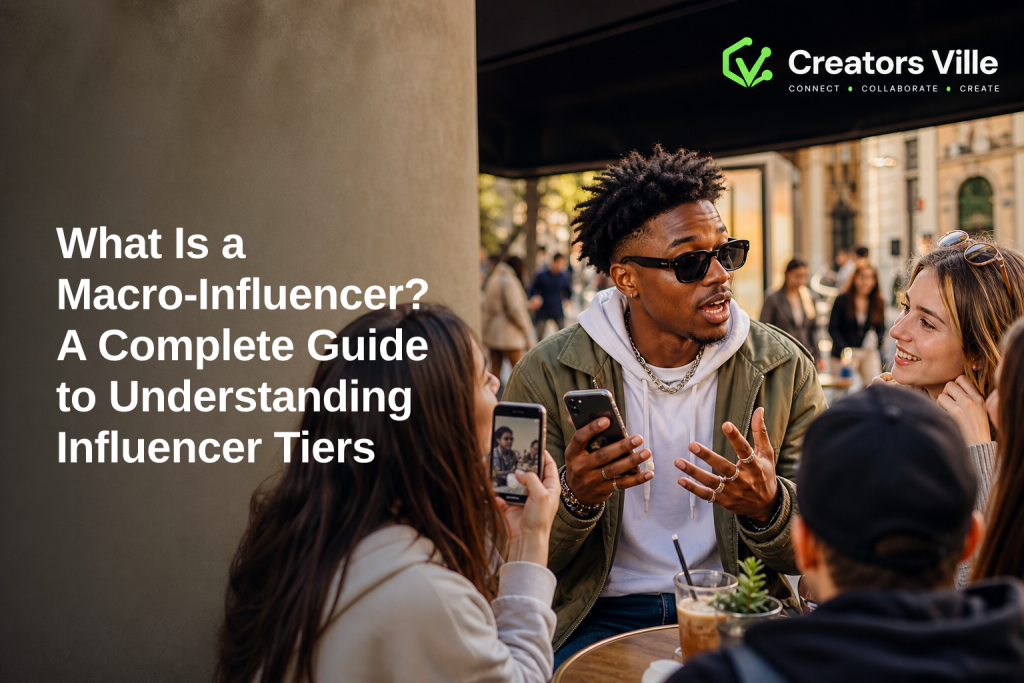
A macro-influencer has 100,000 to 1,000,000 followers on a given platform. Therefore, they sit above mid-tier creators and below mega/celebrity names. In practice, they mix broad reach with enough topic focus to feel credible. This middle ground is why macros are strong options for launch pushes, awareness spikes, and tentpole campaigns.
Furthermore, macro creators sit within a larger tier ladder you’ll hear in briefs: nano, micro, mid-tier, macro, and mega/celebrity. Nano and micro creators tend to have tighter niche ties. Mega/celebrity accounts exceed the macro range and trade more on fame than community. However, macros still tend to be recognized by their audience, which helps with recall and shareability.
For example, a macro in fitness might be a strength coach with 380,000 Instagram followers who posts 5x per week and runs a paid program. In tech, it could be a YouTuber with 620,000 subscribers who reviews laptops and publishes 2 long-form videos per month. In food, think of a 420,000-follower TikTok creator who posts quick, high-contrast recipe videos with on-screen captions.
In addition, macros appear across platforms:
- Instagram: style, beauty, travel, lifestyle, fitness
- YouTube: tech reviews, long-form education, vlog-style storytelling
- TikTok: fast recipes, workouts, product hacks, comedy formats
- X (Twitter): news curation, finance/markets takes, startup commentary
- Twitch: e-sports personalities, variety streamers
Where This Fits in Marketing
- Awareness: Macros can put your product in front of 250,000+ people fast.
- Consideration: Tutorials or product-in-use demos add depth and trust.
- Conversion: Codes and links can work, but plan for 2-5% macro engagement to benchmark interest, not pure last-click sales.
For context on the practice of working with creators at scale, see Influencer marketing (Wikipedia). As you read on, we’ll keep the macro-influencer complete guide understanding aligned with that broader definition of influence and social proof.
How to Decide If a Macro-Influencer Is Right for Your Campaign
Start with a clear plan before you send a single DM. This macro-influencer complete guide understanding framework uses five steps to cut noise and keep you focused on results, not hype.
First, define your campaign goal. Awareness goals favor reach and impressions; conversion goals favor audience-brand fit and content that teaches. Therefore, write one sentence that states the goal, the primary KPI (impressions, clicks, sign-ups), and the time frame (e.g., 30 days).
Second, assess budget and format. Macros can cost $5,000 to $25,000+ per post depending on platform, usage rights, and seasonality. In addition, short-form video tends to price higher than a static post. As a result, confirm which surfaces you need: TikTok video, Instagram Reel, Story set, YouTube mid-roll, or a cross-post bundle.
Evaluate Fit and ROI
Third, evaluate audience-brand fit. Specifically, check creator audience age bands, regions, and interests against your buyer data. However, do not rely on a creator’s self-description. Ask for audience screenshots or media kits, and request a sample of past sponsored posts in your niche.
Fourth, check engagement rates. For macros, 2–5% engagement is a normal range on image/video posts. Moreover, examine comment quality: are people asking real product questions, tagging friends, or sharing, or are they leaving generic emojis? Therefore, pick creators who spark real dialogue.
Fifth, compare ROI vs. other tiers. On the other hand, two to three micro creators might beat one macro on clicks in a niche launch. However, a single macro could deliver cleaner project management and a bigger awareness spike. Weigh CPM, projected clicks, and the content’s re-use value in paid ads and email.
Quick Decision Checklist
- Goal written in one sentence with a clear KPI and due date
- Budget set for content type and paid usage window
- Audience fit proven with screenshots and past sponsor content
- Engagement in the 2–5% macro band with quality comments
- ROI plan compares macro

**See pricing, plan budgets →
Also Read!
Who Is Leah Halton? A Complete Guide to the Viral TikTok Creator
Common Mistakes When Working With Macro-Influencers
Even smart teams waste budget by chasing big numbers without context. This macro-influencer complete guide understanding highlights the pitfalls you can avoid on your first brief.
First, choosing by follower count alone. A 700,000-follower account with weak comments will lose to a 220,000-follower creator who educates and replies. Therefore, sort by engagement quality and audience alignment before follower size.
Second, ignoring engagement benchmarks. For macros, 2–5% is a reasonable engagement range for standard posts. However, short-form video can spike higher during trends.
As a result, compare like with like: Reels vs. Reels, not Reels vs. carousels.
Briefs, Rights, and Clarity
Third, skipping audience authenticity checks. In addition, ask for audience country splits and age ranges, then cross-check against your shipping zones and buyer file. Therefore, if 60% of a creator’s audience is outside your target market, move on.
Fourth, unclear deliverables. For example, a brief that says “one video” without length, hook, product claims allowed, and due dates leads to delays. Instead, write the first 5 seconds you want, list two must-say points, and link 3 brand-safe references.
Fifth, not negotiating usage rights. On the other hand, usage adds real value. If you plan to run the post in paid ads for 60–90 days, you’ll need that in writing. Moreover, discuss raw file delivery, edit rounds, and allowlisting access up front.
Red Flags to Watch
- Sudden follower spikes with flat engagement
- Comment sections full of emojis with no questions
- No past sponsors in your niche
- Vague pricing with no breakdown for usage or add-ons
"Instead of flat catalog shots, they styled the outfits in everyday looks. The content felt natural, and within weeks, our hashtag hit 2M+ impressions." — VogueRise
Tools and Platforms for Finding the Right Macro-Influencer
You have three main approaches: manual research, influencer databases, and campaign platforms. This macro-influencer complete guide understanding shows how to stack them in a sane workflow.
First, manual research. For example, start with platform search, hashtags, and “Suggested” creator panels. Save 20–30 posts that match your style. Therefore, build a short list based on content fit before you even check follower size.
Second, influencer databases. In addition, these tools index creators and expose data like audience regions and brand mentions. However, take estimates as directional. As a result, always request current screenshots from the creator.
Third, campaign management platforms like Creators Ville use AI creator matching to connect brands with influencers across tiers and niches. Moreover, you can search, filter, and connect with creators by niche, region, and engagement band, then track real-time performance and analytics in one place. In fact, platforms in this category also tend to include contracts, automated payouts, tax form handling, and ready-made templates to help teams launch campaigns faster.
How to Work Faster With Platforms
- Use AI creator matching to generate a 10–20 creator shortlist in minutes
- Filter by region, age bands, and engagement to tighten fit
- Track sales, engagement, and brand lift in one dashboard
- Store approved briefs and contracts as templates for reuse
"Our brand struggled to connect online until creators showed how our lamps lit up their cozy spaces. We sold out three collections in a row." — GlowNest
As social proof, the platform experience is trusted by 50,000+ brands and creators, and most users are Live within 24 hours. In addition, signing up is completely free. For further context, past campaigns reported 1.02M views with an 84% approval rate for Olay Skincare and 954k views with a 73% approval rate for a Burger King Food Creator Campaign. Therefore, you can move from shortlist to first post in days, not weeks.
What to Do Next: Putting Macro-Influencer Knowledge Into Action
It’s time to turn notes into action. This macro-influencer complete guide understanding wraps with a concrete plan you can run this week.
First, audit your goal and message. Specifically, write a one-line goal, list two must-say claims, and pull three best-performing posts from your own feeds as creative cues. Therefore, your brief starts with proof, not guesses.
Plan and Shortlist
Second, shortlist 5–10 macro-influencers in your niche. In addition, mix platforms if your audience spans Instagram and TikTok. However, keep the brief and offer consistent across creators so you can compare results.
Third, draft outreach with clear expectations. For example, spell out the content types, length, hook, two key claims, one call to action, due dates, usage window, and payment terms. As a result, you’ll see faster replies and cleaner quotes.
Fourth, run a single paid test before you commit. Moreover, ask for one hero asset and one backup edit, then track performance for 14–30 days. If you see strong saves, shares, and high watch time, expand to a 90-day deal.
Fifth, plan re-use. Therefore, tag your best creative for paid ads, email, and product pages. In 2026, content that teaches and shows real use cases travels far across channels.

Key Takeaways
- Macro-influencers have 100,000 to 1,000,000 followers and sit between mid-tier and celebrity.
- Plan around goals, a $5,000–$25,000+ per-post budget, audience fit, 2–5% engagement, and clear usage rights.
- Avoid picking by follower count alone; judge comment quality and authenticity.
- Use AI matching, filters, and real-time analytics to speed up shortlists and track results.
- Start with one paid test, then scale the winners into 60–90 day deals with re-use plans.
What to Do This Week
Block two hours to write a one-page brief, build a 5–10 creator shortlist, and send outreach with a single clear offer and due dates. Then, pick one creator for a paid test and set a 30-day review to decide if you expand or pivot based on the data.