

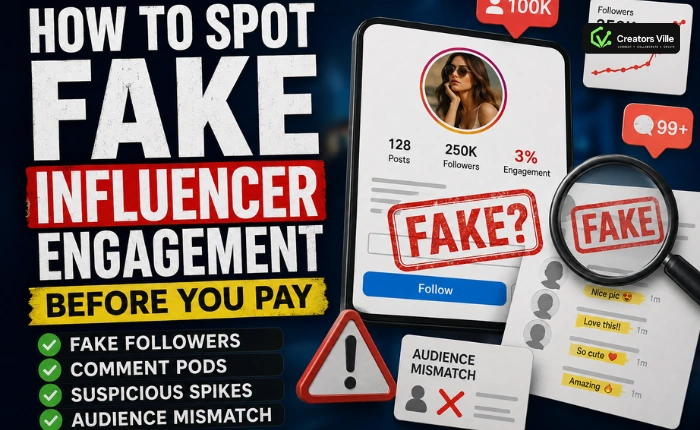
A 3% engagement rate is a misleading headline metric if the audience falls outside your buyer persona or price sensitivity band — which it often does. A creator whose audience skews male aged 45–60 might have genuine, passionate engagement. If you sell D2C skincare to women aged 22–35, that engagement does nothing for you.
Fake engagement is the oldest problem in influencer marketing and somehow still the most expensive one. Brands spot it after the campaign ends, when the views didn’t convert and the “engaged” audience turned out to be bots, reciprocal commenters, and follow/unfollow churn recycled into a vanity metric. By then the budget is gone.
The fix isn’t more scepticism. It’s a specific set of signals you check before you reach out — and a filtering workflow that eliminates the obvious fraudsters at the search stage. Here’s exactly how to do it.
Why Headline Metrics Fail You
Engagement rate as a single number is nearly useless without context. A creator whose follower base was built organically in a tight niche looks very different from one who gamed the growth — even when the engagement percentage printed in the dashboard is identical.
Follower count is easy to game. Sudden follower spikes — a sharp vertical jump followed immediately by a plateau, unattached to any viral post or press moment — are a documented fraud signal. So is follow/unfollow churn, where a creator artificially inflates their base by mass-following accounts and unfollowing them once a portion follows back. Platforms crack down periodically. Creators find workarounds. The churn continues.
Meanwhile, 73% of brands now prefer micro and mid-tier creators — precisely because their audiences tend to be more organically built. But “micro-influencer” is not a fraud-proof label. A creator with 40,000 followers can run the same comment-pod scheme as one with 4 million. Follower tier doesn’t change the incentive to inflate numbers; it just changes the scale.
The Four Fraud Signals Worth Checking
These are patterns you can identify from a creator’s public profile before any money changes hands.
1. Sudden Follower Spikes
Organic growth is uneven but tied to content moments — a strong post, a collab, a news mention. Growth that goes flat for months, spikes sharply, then flatlines again with no obvious trigger deserves a hard look before you proceed.
2. Follow/Unfollow Churn
Some tools expose follow history directly. Where you can’t access that, look at the ratio of accounts they follow to their follower count. A creator following a very large number of accounts relative to their own base is a yellow flag — not a disqualifier on its own, but worth reading alongside other signals.
3. Comment Pod Activity
Comment pods are groups of creators who agree to comment on each other’s posts immediately after publishing. The result is a high comment count that generates vanity metrics without purchase intent. The tell: repetitive comments, generic praise, and accounts that appear across multiple posts with similar timing. “Love this! 🙌” posted by the same accounts on every piece of content is a pattern, not enthusiasm.
4. Audience Composition Mismatch
A creator whose content is clearly rooted in one geography or demographic, but whose audience profile tells a completely different story, is a sign the audience was bought or artificially aggregated. Where platform data allows, a sharp mismatch between creator context and audience composition is one of the cleaner fraud indicators available.
The Authenticity Metrics That Actually Matter
Spotting fraud is only half the job. The other half is identifying genuine engagement that signals commercial intent. These are the metrics worth weighting:
Comment-to-like ratio. Real audiences comment when they have something to say. Bot-driven or pod-driven engagement tends to distort one side of this ratio — unusually high likes relative to comments, or vice versa, warrants investigation.
Meaningful comment rate vs. repetitive comment detection. Quantity of comments is the wrong measure. What matters is whether comments ask questions, share experiences, or reference specific details from the post. “So helpful!” on every post means nothing. “Just ordered this after watching your review, does it work on dry skin?” means a great deal.
Save and share rates. These are harder to game and correlate more strongly with commercial intent than likes. When someone saves a post, they’re planning to return to it — a signal of relevance to a purchase decision. Shares extend reach organically. Both are signals a fraudulent engagement scheme rarely bothers to manufacture, because they don’t inflate the visible metrics brands traditionally buy against.
Click-through from bio links. A creator who drives consistent traffic to their link-in-bio — and whose audience follows through — is demonstrating actual influence over behaviour, not just passive scroll behaviour. Click-through from bio links is one of the named engagement authenticity metrics worth tracking before and during a campaign.
How to Filter Before You Even Reach Out
The fastest way to eliminate low-quality candidates is to never encounter them in the first place. This is where search discipline matters more than vetting discipline.
Creators Ville — trusted by 50,000+ brands and creators — lets brands filter creators by niche, region, and engagement level before browsing any profiles. That sequence matters. Brands that browse creators before defining those three parameters produce an incoherent creator mix — a collection of profiles that looked individually interesting but share no audience logic.
Define your filters first. Niche should be narrow enough to produce content consistency. “Fitness” is too broad. “Postpartum fitness for women aged 28–38 in Tier 1 Indian cities” is a filter that will yield a creator whose audience maps onto a real buyer persona. A niche defined too broadly produces inconsistent content and unpredictable cost-per-view — two problems that compound each other.
Engagement level as a filter cuts out the obvious outliers before you spend time on manual vetting. You’re not looking for the highest engagement — you’re looking for engagement that’s consistent with the creator’s size, niche, and posting frequency. Spikes and drops matter more than the average.
Tracking Readiness: What Brands Miss Before Launch
Even a vetted, authentic creator produces unattributable results if your tracking isn’t set up correctly. The tracking readiness checklist includes UTM implementation, unique discount codes used correctly, and consistent content tagging — and most brands skip at least one of these on their first campaign.
A creator with genuine engagement driving real clicks to your product page is invisible in your analytics if all those clicks arrive on the same UTM as your paid social. You’ll misattribute the traffic, undercount the campaign’s impact, and the CFO will move the budget to paid search. Not because influencer marketing failed — because the numbers couldn’t be defended in a spreadsheet. This attribution breakdown is a documented failure pattern that has nothing to do with creator quality and everything to do with setup.
Unique discount codes are the most reliable attribution tool for D2C campaigns. They require no technical setup on the creator’s side, they’re trackable at order level, and they give the creator an incentive to actively promote them. Set them up before briefing. Not after.
One More Thing on Engagement Rate
The industry is moving toward micro and mid-tier creators for their engagement-to-cost ratio. That’s the right direction. But tier alone doesn’t protect you.
Micro-influencers — defined as creators with between 10,000 and 100,000 followers — deliver their best results when audience fit is tight. A micro-influencer with 30,000 highly engaged followers in a specific niche outperforms a celebrity with 3 million followers on the performance metrics that matter for D2C brands. But only when those followers are the right ones — and only when the engagement is real.
Vetting isn’t a one-time checkpoint. It’s a standard that should apply to every creator before every campaign, regardless of how well a previous collaboration went. Audiences shift. Creators change content strategy. Pod memberships evolve. Run the same checklist each time.
The Short Version
- Check for sudden follower spikes, follow/unfollow churn, and comment pod patterns before reaching out.
- Weight save rates, share rates, and bio link click-through over raw comment counts.
- Filter by niche, region, and engagement level before browsing profiles — not after.
- Narrow your niche definition until the audience maps to a real buyer persona.
- Set up UTM parameters and unique discount codes before briefing any creator.
The brands that consistently get results from influencer marketing aren’t better at picking creators. They’re better at eliminating bad ones early — and building a workflow that catches fraud before it costs anything. That’s a repeatable process, not a talent.
Want creator filtering, Smart Analytics & Reports, and Live Campaign Dashboards in one place? Start your free Creators Ville trial and see how fast a clean creator roster comes together.