

Most influencer campaigns don’t fail at execution. They fail in the 72 hours before a single creator is contacted — because the brand started outreach before it had anything ready to send them to.
I’ve watched this pattern repeat across D2C startups and mid-sized e-commerce brands alike. A marketing lead is excited. They find a few creators they like, fire off DMs, get replies — and then spend the next three weeks scrambling to finalise a brief, set up tracking links, confirm inventory, and nail down payment terms. By the time the backend is sorted, half the creators have moved on to other deals. The campaign that should have launched in a week is now six weeks in the making.
The fix is obvious in hindsight and almost nobody does it: build the entire workflow before you reach out to anyone.
Why Sequence Is Everything
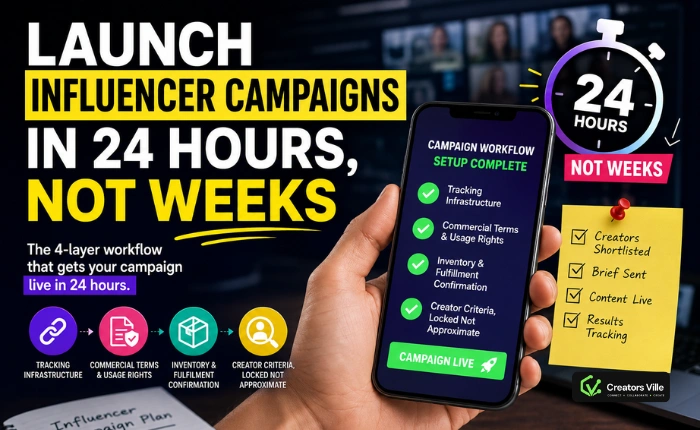
Creators Ville — an influencer-marketing platform used by 50,000+ brands and creators — tracks something most platforms don’t publish: the correlation between setup order and time-to-live. The finding is blunt. Most users go live within 24 hours when the campaign workflow is configured before reaching out to creators; campaigns that attempt to build the workflow and run outreach simultaneously take weeks to launch.
That gap — 24 hours versus weeks — isn’t about budget or creator access. It’s purely sequencing.
And with global influencer marketing spend now at $32.55 billion and 62% of brands increasing their influencer budgets in 2026, the cost of a slow launch is rising. Every week a campaign sits idle is a week competitors are capturing the creators you wanted.
The Four-Layer Workflow You Must Complete First
Think of campaign readiness in four distinct layers. All four must be locked before you open a search filter or type a creator’s name.
Layer 1: Tracking Infrastructure
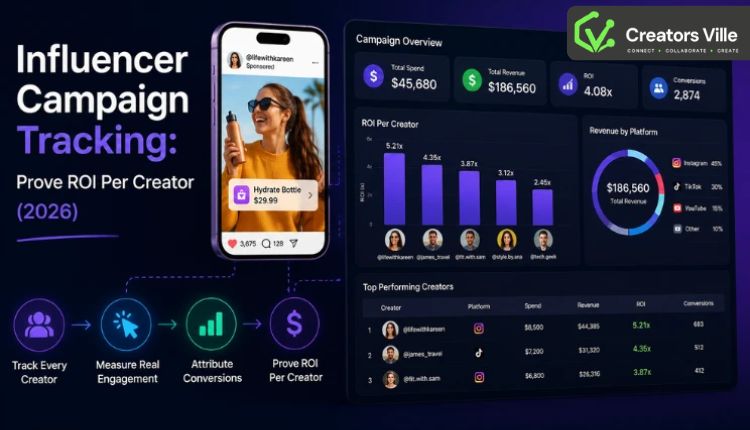
This is where campaigns die most quietly. A creator posts. People watch. Sales come in. And nobody can prove the connection because the tracking was an afterthought.
Before anything else, confirm three things are in place: UTM parameters on every destination URL, unique discount codes assigned per creator, and a consistent content tagging convention. That last one matters more than most teams realise — without it, campaign posts can’t be pulled from analytics without manual sorting.
Skip any of these and attribution breaks. When it does, brand teams default to paid search “where tracking feels cleaner, even if costs rise” — not because influencer marketing underperforms, but because it can’t be defended in a spreadsheet. Fix the tracking layer first. Everything else depends on it.
Layer 2: Commercial Terms and Usage Rights
Decide your payment model before you filter a single creator. 78% of brands now prioritise performance-based payment models over flat-rate agreements — and Influence supports exactly that structure, with brands paying creators only for views generated rather than upfront flat fees. Know which model you’re running before the conversation starts, because changing it mid-negotiation destroys trust.
Equally important: decide usage rights now. Failing to secure usage rights upfront means that winning content cannot be amplified through paid social allowlisting after the post is already live. You find a creator whose video performs at three times your benchmark, and you can’t boost it because you didn’t include a rights clause in the original brief. That’s a preventable loss.
Layer 3: Inventory and Fulfilment Confirmation
This one sounds operational, not strategic. It is both. Product seeding inventory holds and shipping delays disrupt campaign timelines even when the creator workflow is clean. A creator who has agreed to post, has your brief, and is ready to film cannot post if the product hasn’t arrived.
For product seeding and gifting campaigns — a core use-case on the platform — confirm available inventory and realistic fulfilment windows before you contact creators. Build in buffer. If your warehouse can ship in five days, plan for eight. Creators book content calendars in advance; a delay on your side pushes them to the next brand in their inbox.
Layer 4: Creator Criteria, Locked Not Approximate
Most brands arrive at creator search with vague criteria. “Lifestyle, female, Indian audience, decent engagement.” That’s not a filter — that’s a feeling.
Lock down specifics before you open the discovery tool. Creators Ville lets you set precise parameters across niche, region, and engagement level. Go further and define which engagement signals actually matter to this campaign. Save and share rates, comment-to-like ratio, meaningful comment rate versus repetitive comment detection, and click-through from bio links are the metrics that separate genuine influence from vanity numbers. A creator with a 3% engagement rate sounds solid — but that figure is misleading if the audience falls outside your buyer persona or price sensitivity band.
Define your criteria precisely. Then search.
Now Run the Search — In This Order
With all four layers in place, creator discovery becomes fast. Creators Ville’s AI-Powered Campaign Matching surfaces creators based on purchase intent signals — including save and share rates, link sticker click-through, and prior affiliate redemptions — rather than raw follower counts. Filter by niche, region, and engagement level. Shortlist. Brief immediately, because your brief is already written.
One positioning note worth holding: a micro-influencer with 30,000 engaged followers in a specific niche outperforms a celebrity with 3 million followers on almost every performance metric that matters to a D2C brand. Micro-influencers — creators in the 10,000–100,000 follower range — are often faster to brief, more responsive to performance-linked compensation, and more aligned with the niche targeting your Layer 4 criteria already defined. Don’t overlook them in favour of reach.
Watch for fraud signals during vetting: sudden follower spikes, follow/unfollow churn, and comment pods generating vanity metrics without purchase intent are the primary signals of inflated audiences. These show up clearly when you’re checking the right metrics rather than the headline numbers.
Monitor, Not Manage
Once creators are live, the brand team’s role shifts from managing to monitoring. Creators Ville’s Live Campaign Dashboards give visibility into performance, engagement, and ROI in real time — meaning you’re not waiting for end-of-campaign reports to know whether a piece of content is working. If something is underperforming, you know within days. If something is over-delivering, you can lean into it.
Smart Analytics & Reports provide the structured output you need for internal stakeholder conversations — the same conversations that influencer marketing typically loses when attribution is unclear. With tracking infrastructure built in Layer 1, those reports are actually defensible.
The Honest Trade-Off
The workflow-first approach requires discipline that feels slow at the start. If you’re used to moving fast — finding a creator you like and DM-ing them the same afternoon — it will feel like you’re adding friction. You are. Deliberately.
The friction at the front prevents the chaos in the middle. The middle is where campaigns bleed out. Tracking still being set up, creators waiting on briefs, inventory stuck in a fulfilment centre, payment terms still under debate. That’s where budget and momentum quietly disappear — and where most brands conclude influencer marketing “didn’t work.”
With 6,939 influencer marketing companies operating worldwide in 2025, you’re not short of platforms or creators. What you’re short of is operational discipline that converts access into results. That starts with sequence.
The workflow above is a prerequisite, not a substitute for strategy. It’s the foundation that makes strategy executable. For brands refining creator selection further, building collaboration strategies that drive genuine engagement is the logical next step — but only once the workflow beneath them is solid.
Set up your workflow. Then reach out. The 24-hour launch is real — but only if you earn it in the right order.
Start your free Creators Ville trial and configure your campaign workflow before your next outreach — with no middlemen and no hidden fees, the only thing between you and a live campaign is sequence.