

**Get an instant creator shortlist today →
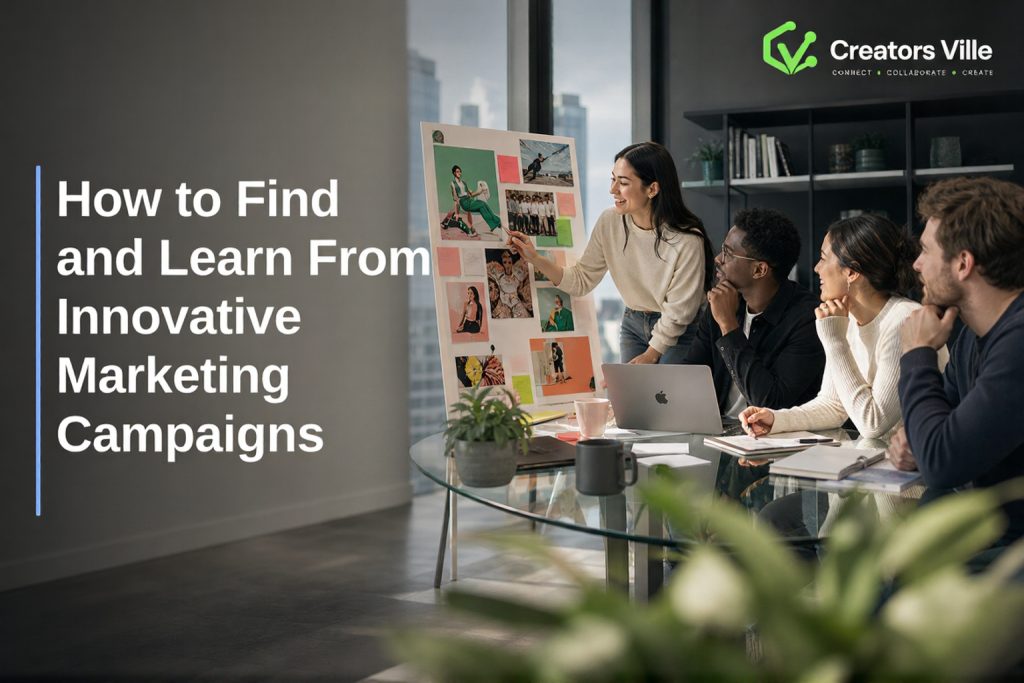
Most “viral” formats stop working by the time you copy them. To find learn from innovative campaigns you can trust, use a clear method, not guesswork, and move from save-to-test in days, not months.
Here’s the answer upfront: define what “innovative” means for your brand, track 15–30 creators close to your buyer, collect only examples you can test in your funnel, and run one small experiment this quarter. You’ll build a repeatable loop that still works in 2026, even as platforms shift.
For context, think of modern creator-led programs as a branch of influencer marketing. But the playbook adds AI-driven tailoring, cross-platform stories, niche communities, and live shopping. The best teams don’t chase trends. They set simple rules, score ideas, and ship fast.
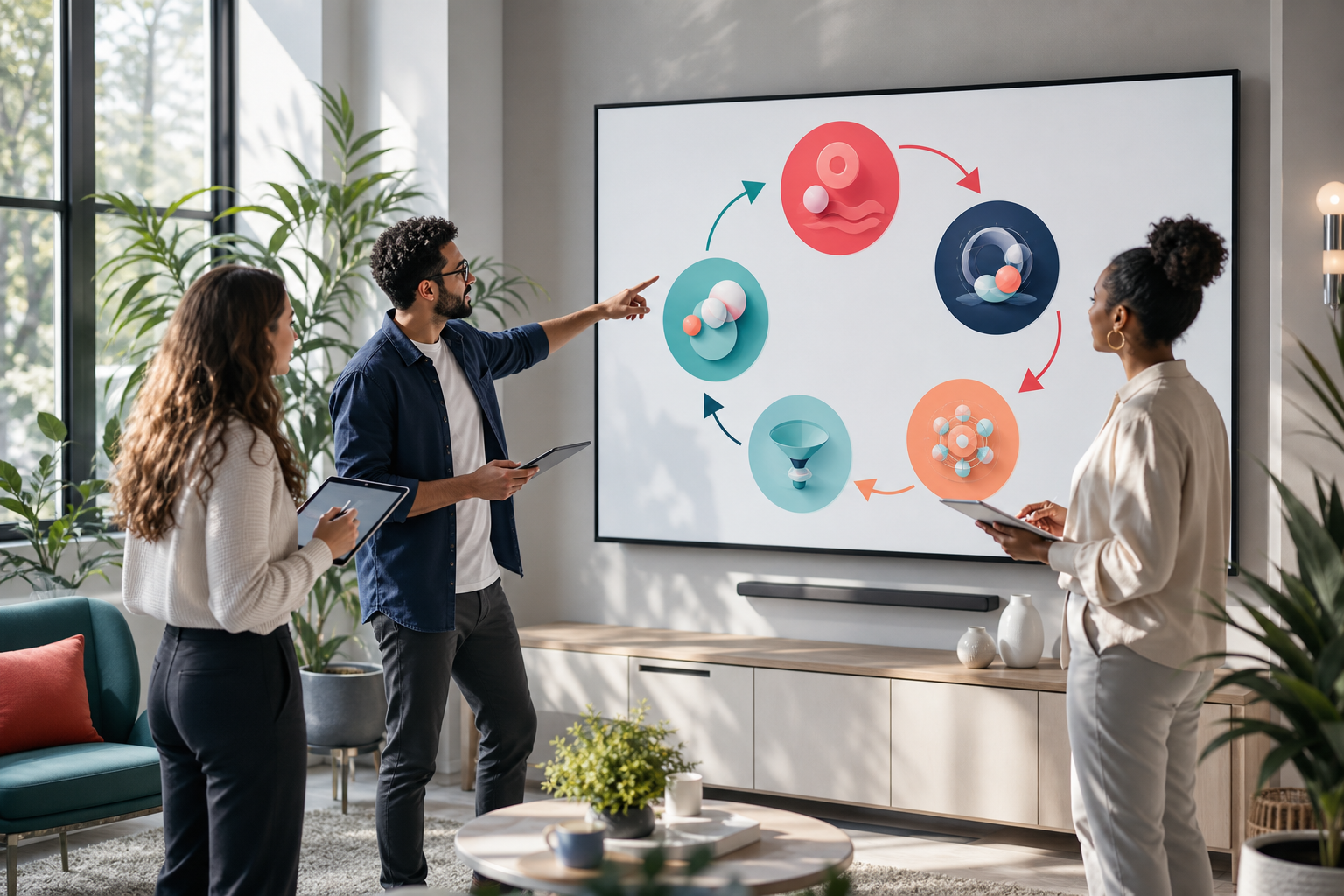
What Makes a Marketing Campaign Truly Innovative?
Innovation isn’t a vibe. It’s a set of choices that reduce friction for buyers and speed up learning for teams. To find learn from innovative work, use a simple scorecard you can apply in under five minutes per idea.
First, AI-backed tailoring. Does the creative use data or models to shape the message, product angle, or timing for a person or a micro-segment? This could be dynamic hooks, tailored offers, or even content that changes by context.
Second, community-driven content. Does the idea recruit a niche group (Discord, Reddit, private Telegram, or a brand-run circle) to co-create formats, inside jokes, or challenges? Moreover, does it give those people status or utility, not just swag?
Third, cross-platform storytelling. Does the story unfold in parts across short video, live, email, and owned surfaces like product pages? In addition, are the beats planned so each touch adds new info rather than repeating the same pitch?
Fourth, creator-led UGC. Are real makers or reviewers in the lead, not as a bolt-on? Specifically, do they show use in context, explain trade-offs, and keep the tone honest over polished?
Fifth, sustainability messaging. Does the idea talk in plain language about repair, reuse, low-impact materials, or fair pay? Furthermore, does it tie to a product path buyers can choose today, not a promise for 2030?
- Quick scorecard (rate 0–2 each; 10 max):
- AI tailoring
- Community co-creation
- Cross-platform arc
- Creator-led UGC
- Clear sustainability path
“Experience one of its kind influencer marketing—connect with verified influencers, track real-time performance, and gain data-driven insights to build long-term, transparent relationships. No middlemen, no hidden fees.”
As a result, you’ll stop saving “cool” ideas with no fit. Instead, you’ll collect formats you can test, which is the only way to reliably find learn from innovative moves that work for you.
8 Innovative Marketing Campaigns— And Why They Worked
Below are eight real campaigns and programs across AI, UGC, AR, communities, live commerce, and bold brand shifts. Use them as briefs you can adapt, not scripts to copy.
Olay — Skincare Summer Creator Series
- Tactic: Creator-led product education with seasonal hooks.
- Results: Olay Skincare Summer Campaign achieved 1.02M views and an 84% approval rate.
- Lesson: Short, routine-based explainers beat glossy ads. Map creators to skin concerns and climates, then let them teach.
Burger King — Food Creator Campaign
- Tactic: Influencer-led product seeding tied to new menu drops.
- Results: Burger King Food Creator Campaign achieved 954k views and a 73% approval rate.
- Lesson: Seed early to creators who already sample fast food on camera. Give them a clear taste-test prompt and one distinct claim to probe.
VogueRise — Styled Everyday Outfit Hashtag
- Tactic: Micro-community activation around daily styling, not runway looks.
- Results: The #VogueRise hashtag hit 2M+ impressions through styled everyday outfit content.
- Lesson: Make the brief about real life. Ask creators to style for work, school pickup, or a first date. Real context scales faster than campaigns built on studio shoots.
Pulse Energy — Relatable Reels for Retail
- Tactic: Creator reels that show “a day with” the product in simple cuts.
- Results: Pulse Energy saw sales spike 40% in the first month through relatable reels.
- Lesson: One-minute demos with jump-cuts and plain captions beat complex motion graphics. Use fast hooks like “3PM slump fix”.
Spotify — Wrapped
- Tactic: AI/data-powered personalization with cross-platform reveals.
- Results: Massive organic sharing each December and creator remixes that extend the arc.
- Lesson: Give people a story about themselves and make it easy to share. Then plan a second beat that riffs on the first (e.g., creators grading their Wrapped).
IKEA — AR “Place” Try-Before-You-Buy
- Tactic: Interactive AR experiences to preview furniture scale at home.
- Results: Shoppers reduce guesswork on size and fit, which builds purchase confidence (see background on Augmented reality).
- Lesson: AR works when it solves one clear doubt. Start with top-return SKUs and make the experience load fast on mid-range phones.
Sephora — Shoppable Live Tutorials
- Tactic: Shoppable live events with creators demoing routines and cart-ready links.
- Results: Live chats spark product questions and real-time bundles; replays keep driving views.
- Lesson: Treat live like a store floor. Prep shade-match FAQs, pin links fast, and schedule a second live 48 hours later to answer comments.
Abercrombie — From Mall Brand to “Modern Essentials”
-
Tactic: Bold brand reposition backed by creator try-ons and capsule drops.
-
Results: Perception shift fueled by haul videos and “how it fits” content that made sizing choices simple.
-
Lesson: Reposition with product truths, not slogans. Put creators in control of fit, fabric, and styling trade-offs.
-
Pull-quote from a growing DTC brand:
“Our brand struggled to connect online until creators showed how our lamps lit up their cozy spaces. We sold out three collections in a row.” — GlowNest
As you catalog wins like these, tag each with the scorecard from the prior section. That’s how you’ll find learn from innovative ideas while keeping brand fit front and center.

Also Read!
How to Run Influencer Product Seeding Campaigns for Marketing Agency Clients
How to Use AI Influencer Matching for Marketing Agency Campaigns
5 Mistakes That Kill Creative Campaigns Before They Launch
Smart teams lose speed not from bad ideas, but from preventable traps. Use these contrasts to steer clear and keep tests moving.
1) Copying viral formats without brand fit
Chasing a trend can boost views, then tank trust. Instead, score the idea against your buyer’s use case. For instance, a chaotic meme style might clash with a premium skincare line. To find learn from innovative work, save only what your buyer would expect to see near checkout.
2) Ignoring creator authenticity
Handing creators strict scripts kills why they were picked. On the other hand, zero guardrails can confuse your claims. Set three non-negotiables (use case, one key proof, one CTA) and let tone stay theirs.
3) Over-polishing UGC
Perfect lighting and heavy edits make UGC look like ads. As a result, people scroll past. Keep small flaws that signal “real,” like a quick voice crack or a mid-pan angle shift. It reads as truth.
4) Neglecting measurement from day one
If you don’t define a goal, any number can sound fine. Therefore, pick a single metric per test, like “cost per add-to-cart from Reel views.” Then set a threshold to continue or cut.
5) Launching on too many platforms at once
Spreading a small budget thin hides signal. Moreover, each app wants its own hook and cut. Start with one channel where your buyer acts now. Then expand week three if the first cut clears your target.
- Quick pre-launch checklist:
- One buyer, one job to be done
- One channel, one core metric
- Three non-negotiables for creators
- Budget for a second cut if the first is close
Use these guardrails to find learn from innovative moves that scale without bloat.
Tools and Platforms That Power Innovative Campaigns
You don’t need a giant stack. You need a few tools that help you spot ideas, match the right creators, and measure truth.
First, social listening. Track sentiment and questions around your core terms and rivals. Save raw phrasing you can echo in hooks. Next, AI creative generators can draft hooks, captions, and shot lists you’ll refine with your creators. In addition, short-form editors like CapCut or Adobe Premiere Rush make resizes and cutdowns fast.
Now, for creator discovery and campaign management, tools like Creators Ville are one option. It’s an AI-powered platform that connects brands with influencers, offers AI creator matching, and provides real-time performance tracking and analytics. Moreover, it includes ready-made templates for quick campaign launches and is trusted by 50,000+ brands and creators. Signing up is completely free.
Furthermore, your analytics needs to close the loop. Pull reach, clicks, adds-to-cart, and sales into one view you’ll check daily. Then tag your wins back to the creative angle, not just the creator, so you can scale the right story.
**Compare pricing for product seeding today →
When your stack is simple and connected, you’ll find learn from innovative formats faster and prove which ones move revenue.
How to Build Your Own Innovative Campaign This Quarter
Here’s a five-step method you can run in one sprint. Speed beats polish. Shipping beats debating.
Step 1: Audit what’s working in your niche
Save 20–30 posts from creators your buyer already follows. Tag each with the scorecard: AI tailoring, community, cross-platform, creator-led, sustainability. Write one sentence on why the hook works. This is how you’ll find learn from innovative examples with a clear bias to action.
Step 2: Choose one tactic to test
Pick the idea with the highest score and the cleanest path to a sale. For example, choose “30-second routine demo with one proof” over a complex multi-part series.
Step 3: Select creators or channels
Shortlist 5–10 creators who already make the chosen format. If you use Creators Ville, AI creator matching can surface aligned partners fast, and most users are Live within 24 hours. You can launch various campaign types including paid collaborations and product seeding without leaving the workflow.
Step 4: Set measurable KPIs
Define one metric and one threshold. For instance, “Cost per add-to-cart under $2.20” or “Save rate above 6%.” Then decide before launch what you’ll cut, tweak, or scale.
Step 5: Launch small and iterate
Post two variants in 7 days. Change one variable at a time: hook, first shot, or caption. Then scale the winner with a paid boost or a creator allowlist.

- Iteration prompts to use after V1:
- “Can we make the first three seconds clearer?
- “What’s the simplest proof we can show?
- “Which comment should become the next hook?
Keep the loop tight. That’s how teams in 2026 keep shipping while others stall.
Key Takeaways
- Use a five-part scorecard to decide what “innovative” means for you, not the timeline.
- Catalog eight proven patterns: AI-tailored stories, creator UGC, AR try-ons, micro-communities, live shopping, sustainability, cross-platform arcs, and bold rebrands.
- Avoid five killers: trend-chasing, scripted creators, over-polished UGC, weak measurement, and platform sprawl.
- Use simple tools and one platform for AI creator matching, analytics, and templates so you can launch in under a day.
- Run a two-variant test this quarter and scale the winner with a clear KPI.

What to Do This Week
Block two hours to score 20 creator posts with the five-part framework, pick one tactic, and brief two creators for a small test. If you want a fast start, use AI creator matching and ready-made templates to go live this week.