


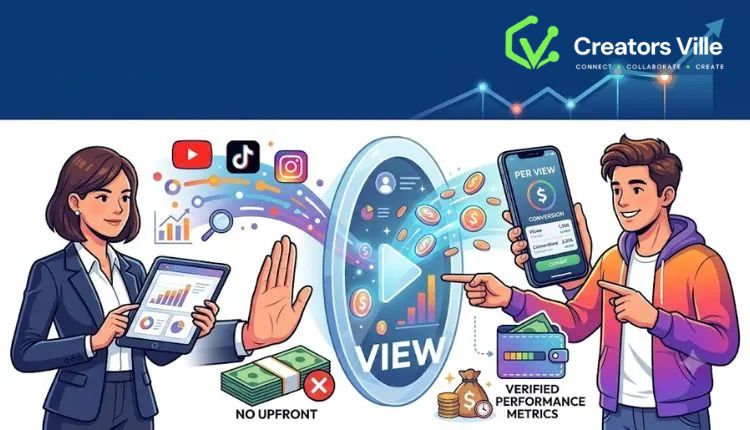
According to Linqia’s 2026 State of Influencer Marketing Report, 62% of brands are increasing their influencer budgets this year — and a meaningful share of that new spend will be wasted on the same flat-fee, pay-upfront model that failed them last year. The structure is the problem. The creator gets paid whether the content performs or not, and the brand absorbs every joule of performance risk before a single view lands.
Pay-per-view influencer campaigns flip that logic. You pay for what you get. It sounds obvious. It is still the minority approach. Here is why it works, where it breaks, and how to run one end-to-end.
Why Upfront Fees Consistently Underperform
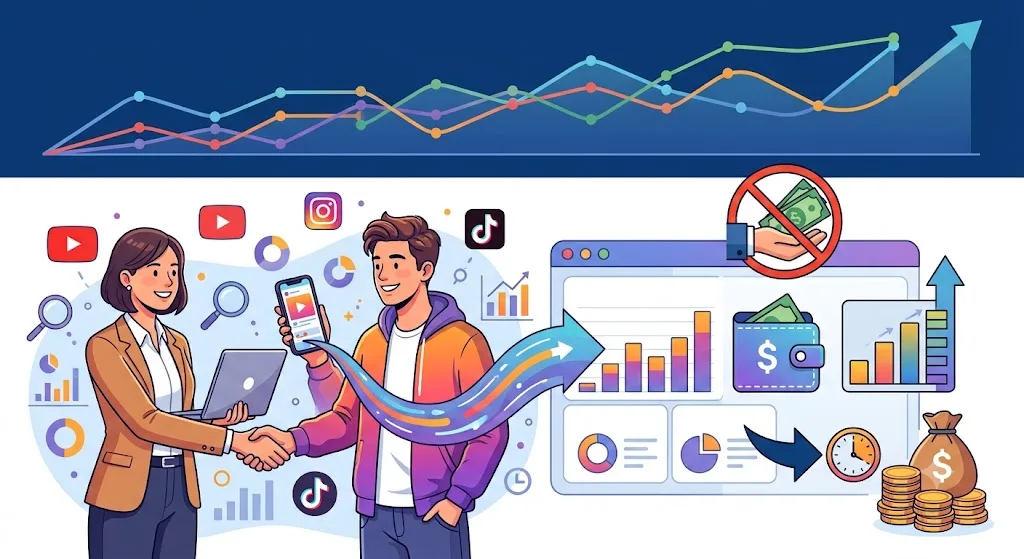
The standard influencer deal is a fixed fee paid before the post goes live. That structure made more sense when creator audiences were stable and algorithm reach was predictable. Neither of those things is true anymore.
A creator’s performance can swing overnight because of a trend shift or a platform algorithm tweak — and if your campaign workflow requires five tools and six approval steps, you miss the launch window entirely. The flat fee is already spent. You have no recourse and no leverage left to extract.
Fake and ghost accounts compound the damage. They skew engagement figures, inflate CPMs, and conceal where real buyers actually are. The tell-tale signals — sudden follower spikes, follow/unfollow churn, comment pods that generate vanity metrics without driving any purchase intent — are rarely visible in a basic creator profile check. Without fraud checks, brands pay for reach that never reaches checkout, and the waste only surfaces after the invoice has cleared.
Upfront fees make all of this structurally worse. The payment is made. The incentive to perform is gone.
What Pay-Per-View Actually Changes — and What It Doesn’t
The model is straightforward: brands pay creators based on views generated, not on a flat upfront fee. Risk shifts. Creators are incentivised to produce content that actually reaches people because their payout depends on it.
This matters most for UGC and product-seeding campaigns where performance variance is high and content quality is difficult to predict in advance. In a pay-per-view structure, your cost-per-view is calculable before you scale. You are not guessing at efficiency after the fact.
What it doesn’t fix: brief quality. Unclear creative direction suppresses creator acceptance rates and causes calendar slippage. A creator whose payout depends on views will gravitate toward campaigns where the direction is unambiguous. Vague briefs still kill campaigns regardless of the payment model.
It also doesn’t fix attribution automatically. Without a single source of truth — UTM links, unique discount codes, first-party pixel integrations all reconciled in one place — ROI decisions degrade into gut calls and budget cuts follow. The payment model is one part of the equation. The measurement infrastructure is the other.
The Workflow: How to Run a Pay-Per-View Campaign on Creators Ville
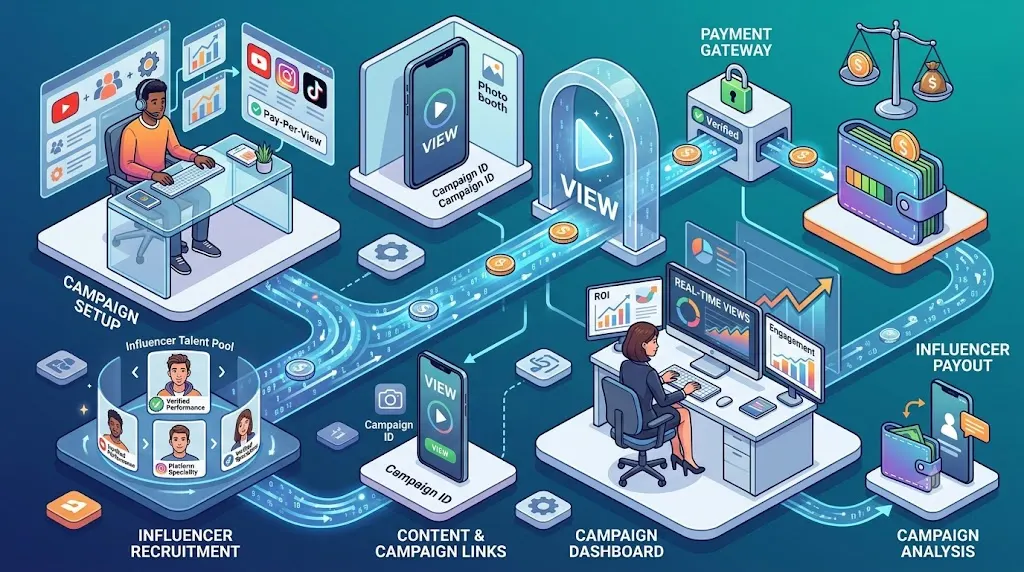
Creators Ville— the influencer-marketing platform trusted by 50,000+ brands and creators — is built around this exact payment structure. Brands pay creators only for views generated, not upfront. No middlemen, no hidden fees. Here is the step-by-step.
Step 1: Define goals, budget, and audience before you touch creator search
Brands set up their profile with goals, budget, and target audience first. This sounds like table stakes. Most brands skip it and browse creators before anchoring their campaign parameters — which means the creator mix ends up incoherent. Your niche, region, and engagement thresholds need to be defined before filtering, not after.
Step 2: Filter for performance signals, not follower counts
Creators Ville lets brands filter creators by niche, region, and engagement level. Engagement level is where the signal lives. Micro-influencers — creators with between 10,000 and 100,000 followers — consistently outperform celebrities on audience trust and interaction rates. As follower counts scale up, engagement rates tend to drop. A micro-influencer with 30,000 deeply engaged followers in your exact product category will generate more actionable views in a pay-per-view structure than a passive mega-audience — and your spend will reflect that gap directly.
A 3% engagement rate is a misleading metric if the audience falls outside your buyer persona or price sensitivity band. Engagement authenticity — comment-to-like ratio, meaningful comment rate, velocity spikes — matters more than the headline number. The platform’s AI-Powered Campaign Matching surfaces creator fits based on your campaign parameters rather than requiring you to manually sift through results.
Step 3: Monitor performance while the campaign runs, not after
Live Campaign Dashboards let brands track performance, engagement, and ROI in real time. This is where pay-per-view earns its cost efficiency. If a creator’s content is underperforming mid-flight, you can see it before you’ve committed further spend. You are not waiting for a post-campaign report that arrives after the budget is exhausted.
Smart Analytics & Reports aggregate what those dashboards surface into structured output — the kind that lets you make a repeatable case for the channel internally, rather than presenting a screenshot and hoping the room believes you.
Step 4: Repeat without renegotiating from scratch
Creators Ville offers Unlimited Brand Collabs, which removes the per-collaboration friction that kills momentum between campaign cycles. For D2C startups and e-commerce brands running product seeding across multiple SKUs or seasonal launches, that matters.
One-post, one-payment transactional campaigns miss the credibility-building effect that repeated endorsements over months create. Pay-per-view makes repeat collaboration financially sensible — you are not committing a fixed fee every time a creator posts again. The relationship can compound. The single post cannot.
Three Things That Undermine Pay-Per-View (Watch For These)
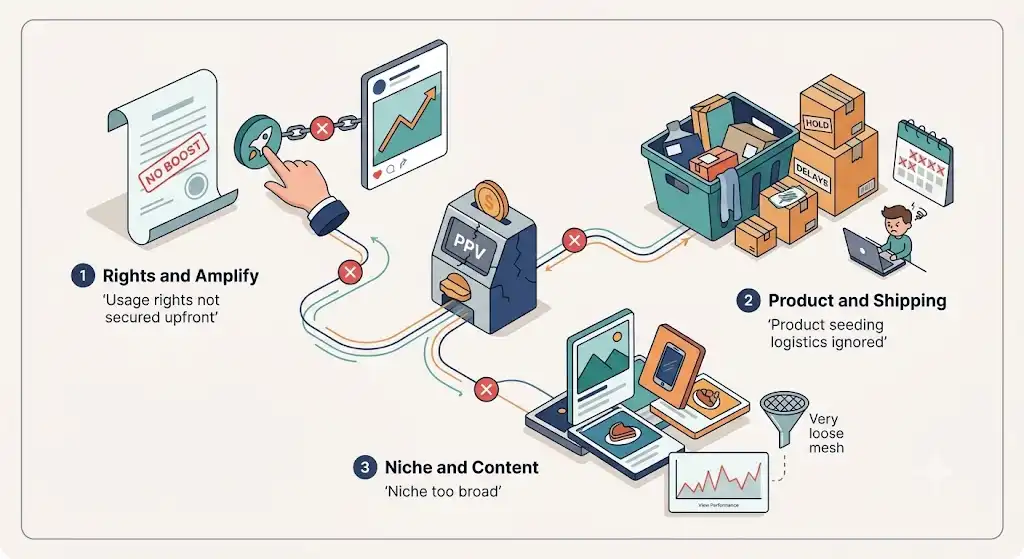
Usage rights not secured upfront. Winning content cannot be amplified through paid social unless allowlisting permissions are settled before the post goes live. This is painful in any model but stings hardest in pay-per-view, when the content is already performing and you have no ability to boost it.
Product seeding logistics ignored. For gifting campaigns, inventory holds and shipping delays disrupt timelines even when the creator workflow is clean. Build that lead time into the campaign calendar before launch, not after.
Niche too broad. Broad categories produce inconsistent content, which produces inconsistent view performance. The tighter the niche filter, the more predictable your cost-per-view becomes. That predictability is the whole point of this model.
The Pricing Reality for Creators
For creators, Creators Ville’s subscription is ₹299/month on a monthly plan, or ₹249/month billed yearly — with no percentage skimmed from brand deals and no opaque platform cut. That transparency flows directly back to brands: no hidden fees means the budget you allocate goes toward campaign delivery.
Most brands are live within 24 hours of setting up their workflow. That is a meaningful signal — the setup is short enough to not require an implementation project or a dedicated ops hire.
The Actual Case For Switching
Upfront fees persist because they are comfortable. Creators prefer guaranteed income. Brands prefer a predictable line item. But predictable and efficient are not the same thing. Most influencer budgets are carrying waste that nobody is measuring because the invoices cleared weeks ago, and attribution was never set up cleanly.
Pay-per-view is not the only change worth making. You still need tight briefs, smart creator filtering, real-time monitoring, and clean attribution. But the payment model is the structural variable that everything else runs on — and right now, for most brands, that structure is working against them.
The influencer marketing platform market was valued at $34.2 billion in 2025. Most of that spend still flows through flat-fee, upfront deals. That gap is where the efficiency opportunity lives.