



From following trends and vibing on beats to promoting brands, influencers are all over the internet. But finding influencers is easy; finding the right platform to manage them isn’t.
As influencer marketing grows more competitive, brands need solutions that simplify creator discovery and measure ROI accurately. With so many options available, choosing the best influencer platform can feel overwhelming.
This will help you cut through the noise by highlighting the features and factors that matter most in 2026.
Listen to the blog.
What Do You Mean By Influencer Management?
When influencers promote brands and products, the internet notices them with it, resulting in a great brand persona with a guaranteed audience. Influencer marketing is one of the most effective ways of branding and marketing your product. The influencers promote a brand in the most relatable way to their audience, which creates a strong brand image and does effortless promotion.
The government of India is investing heavily in the creator economy, signifying its great contribution and huge impact. Influencers and creators are among the most in-demand careers today, as reports say that at least 60% of Gen Z have tried content creation at least once in their lives and that almost 30% of them now make real money from it.
While content creation remains one of the fastest-growing fields in 2026, there is a serious need to promote and help influencers scale up their careers through a platform that brings them brand collaborations.
Therefore, influencer management refers to identifying, recruiting, coordinating, and maintaining relationships with social media influencers to promote a brand, product, or service. It involves everything from selecting influencers whose audience aligns with the brand’s target market, negotiating partnerships, and planning and approving content to monitoring campaign performance, ensuring timely communication, and measuring results such as reach, engagement, and conversions. Effective influencer management helps build authentic collaborations, strengthen brand awareness, and maximize the return on marketing campaigns while ensuring that influencers represent the brand’s values and goals consistently.
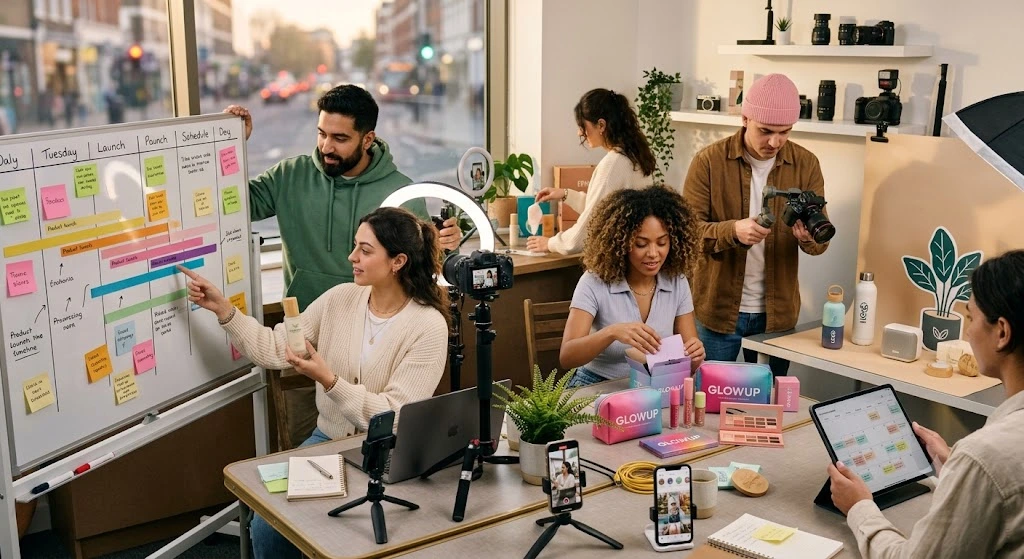
Recognizing The Increasing Demand And Need For Content Creators
The increasing demand for content creators is driven by the rapid growth of digital platforms and the evolving content consumption. Businesses, brands, and organizations rely heavily on creating engaging content to connect with their target audiences, build trust, and strengthen their online presence.
As video-sharing platforms, blogs, and podcasts continue to expand, the need for skilled content creators who can produce high-quality, creative, and audience-focused content has become more important than ever. From promoting products and services to educating and entertaining audiences, content creators play a vital role in digital marketing strategies, making them an essential asset for businesses seeking to remain competitive in today’s digital landscape.
What Is the Need for an Influencer Platform?
An influencer platform is needed to simplify and streamline the process of managing influencer marketing campaigns. It enables brands to discover suitable influencers based on their niche, audience, engagement rates, and performance metrics, making it easier to identify the right collaborators.
The platform also helps facilitate communication, campaign planning, contract management, content approval, payment processing, and performance tracking, all in one centralized system. By automating repetitive tasks and providing real-time analytics, an influencer platform saves time, improves campaign efficiency, enhances transparency, and helps brands measure the return on investment (ROI) of their influencer marketing efforts more effectively.
Also read –
Stop Paying Influencers Upfront: Performance-Based ModelPay-Per-View Influencer Campaigns: Stop Paying Upfront – Creators Ville
Factors That Decide The Best Influencer Platform In 2026.

1. AI-Powered Influencer Discovery
Artificial Intelligence (AI) has become one of the most important features of influencer platforms. Instead of searching manually, AI recommends influencers based on:
- Industry and niche
- Audience demographics
- Engagement quality
- Brand compatibility
- Past campaign performance
- Content relevance
- Brand safety indicators
This significantly reduces the time required to identify the most suitable influencers.
2. Audience Authenticity and Fraud Detection
Fake followers and artificial engagement are major concerns in influencer marketing. The best platforms include advanced fraud detection systems that identify:
- Fake followers
- Purchased likes and comments
- Bot-generated engagement
- Suspicious audience growth
- Engagement manipulation
Brands can therefore collaborate only with genuine creators who provide real marketing value.
3. Comprehensive Influencer Database
A strong influencer platform should provide access to a large and regularly updated database containing creators from multiple industries, including the following:
- Fashion
- Beauty
- Technology
- Gaming
- Food
- Travel
- Fitness
- Education
- Finance
- Healthcare
The database should include influencers across various platforms such as Instagram, YouTube, TikTok, LinkedIn, Facebook, X (Twitter), Pinterest, and emerging creator platforms.
4. Advanced Audience Analytics
The quality of an influencer’s audience is often more important than the number of followers. A good platform provides detailed audience insights such as:
- Age distribution
- Gender
- Geographic location
- Language
- Interests
- Purchasing behaviour
- Income level
- Device usage
These insights help brands reach the right target audience.
5. Multi-Platform Campaign Management
Modern campaigns rarely focus on a single social media platform. The best influencer platforms allow marketers to manage campaigns across multiple channels simultaneously, including:
- YouTube
- TikTok
- X (Twitter)
- Snapchat
A centralized dashboard simplifies campaign coordination.
6. Campaign Automation
Automation improves productivity by reducing repetitive manual work. Essential automation features include:
- Automated influencer invitations
- Campaign scheduling
- Content approval workflows
- Reminder notifications
- Contract generation
- Payment processing
- Performance reporting
Automation enables marketing teams to manage large-scale campaigns efficiently.
7. Real-Time Performance Analytics
Successful influencer marketing depends on measurable outcomes. The best platforms provide real-time dashboards displaying:
- Reach
- Impressions
- Engagement rate
- Click-through rate (CTR)
- Return on investment (ROI)
- Cost per engagement (CPE)
These metrics enable marketers to optimize campaigns while they are running.
8. ROI Measurement
Brands increasingly demand measurable returns from influencer collaborations. A quality platform should calculate the following:
- Revenue generated
- Conversion rates
- Customer acquisition cost
- Return on ad spend (ROAS)
- Overall marketing ROI
- Campaign profitability
These insights help justify marketing investments.
9. Content Collaboration Tools
Effective collaboration between brands and influencers requires organized workflows. The platform should support:
- Content submission
- Creative briefs
- Approval workflows
- Revision tracking
- File sharing
- Messaging
- Campaign timelines
This ensures that published content aligns with brand guidelines.
10. Influencer Relationship Management (IRM)
Beyond individual campaigns, brands should be able to build long-term partnerships with creators. Features include:
- Influencer profiles
- Communication history
- Previous collaborations
- Performance records
- Contract management
- Loyalty programmes
Strong relationships often lead to more authentic and successful campaigns.
Influencer Platforms That Are A Must-Try.
Influencer platforms have become essential tools for brands and agencies looking to manage creator partnerships efficiently and achieve measurable marketing results. Among the leading platforms, Creators Ville (earlier Influience) stands out as a comprehensive influencer marketing solution that enables brands to discover verified creators, launch and manage campaigns, collaborate seamlessly, and track performance through data-driven analytics. With features such as AI-powered influencer discovery, advanced audience insights, campaign management, transparent ROI tracking, and performance-based collaborations, Creators Ville helps businesses of all sizes maximize the success of their influencer marketing initiatives.
Whether a business is a startup, a marketing agency, or a global enterprise, selecting the right influencer platform—especially a feature-rich solution like Creators Ville—can streamline collaboration, improve campaign effectiveness, and foster long-term partnerships with creators while delivering measurable marketing outcomes.
About Creators Ville
The Creators Ville is a creator marketplace designed to connect brands with verified influencers for data-driven marketing campaigns. It enables businesses to discover influencers across different niches, locations, audience sizes, and engagement levels, making it easier to identify creators who align with specific campaign goals.
The platform emphasizes a performance-based marketing model, where brands can launch campaigns, collaborate directly with creators, monitor campaign progress through real-time dashboards, and measure key metrics such as views, engagement, and ROI.
It also highlights features like AI-assisted creator discovery, campaign management, content collaboration, and transparent performance tracking, allowing brands to make informed decisions while reducing the time and complexity involved in influencer outreach. By providing a centralized environment for campaign creation, creator selection, analytics, and collaboration, Creators Ville aims to simplify influencer marketing for businesses of all sizes while helping creators access relevant brand partnerships and monetization opportunities.
Why Creators Ville?
Verified Influencer Marketplace – Connects brands with verified influencers across multiple industries, ensuring authentic and trustworthy collaborations.
AI-Powered Creator Discovery – Helps brands find creators based on niche, region, engagement level, audience type, and campaign goals, making influencer selection faster and more accurate.
Advanced Search & Filtering – Enables users to search and filter influencers by category, location, engagement metrics, and content style to identify the best-fit creators.
Performance-Based Pricing – Uses a results-driven payment model where brands pay creators based on actual campaign performance, such as views generated, providing greater transparency and value.
Campaign Creation & Management – Allows brands to create campaigns, define budgets, target audiences, and collaboration requirements from a centralized dashboard.
Live Campaign Dashboard – Offers real-time monitoring of campaign performance, including approvals, creator participation, views, engagement, and ROI, enabling brands to optimize campaigns as they run.
Data-Driven Analytics – Provides detailed performance insights such as reach, engagement, conversions, and campaign effectiveness to support informed marketing decisions.
Direct Brand–Creator Collaboration – Eliminates unnecessary intermediaries by allowing brands and influencers to connect and collaborate directly, resulting in faster communication and reduced costs.
Multi-Type Campaign Support – Supports a variety of influencer marketing campaigns, including paid collaborations, product seeding, barter campaigns, and performance-based promotions, offering flexibility for different marketing objectives.
Creator Profiles with Key Metrics – Displays detailed influencer profiles featuring ratings, follower counts, niches, pricing, location, and content categories to simplify creator evaluation.
Transparent ROI Tracking – Tracks important performance indicators such as reach, engagement, views, and conversions, helping brands accurately measure return on investment (ROI).
Simple Three-Step Workflow – Simplifies influencer marketing into three stages: create a brand profile, discover and shortlist creators, and launch, track, and optimise campaigns.
Suitable for Businesses of All Sizes – Designed to support startups, D2C brands, marketing agencies, and large enterprises by providing scalable influencer marketing solutions.
User-Friendly Interface – Features an intuitive dashboard that makes campaign setup, creator management, analytics, and collaboration straightforward, even for first-time users.
Conclusion
Choosing the best influencer platform in 2026 requires evaluating factors such as AI-powered creator discovery, audience authenticity, campaign management, analytics, scalability, and ROI tracking. The ideal platform should simplify influencer collaborations while providing actionable insights to maximise marketing success.
Creators Ville stands out as a comprehensive solution by offering brands an all-in-one platform to discover verified creators, manage campaigns efficiently, monitor real-time performance, and build meaningful partnerships. By selecting a reliable and feature-rich platform like Creators Ville, businesses can execute data-driven influencer marketing campaigns that deliver measurable results and support long-term brand growth.
Frequently Asked Questions
1. What should I look for in an influencer platform?
Look for features like influencer discovery, campaign management, audience analytics, fraud detection, reporting tools, and integrations with your existing marketing software.
2. How do I know if an influencer platform is reliable?
Choose a platform with positive customer reviews, transparent pricing, accurate data, responsive customer support, and a proven track record with brands in your industry.
3. Are influencer platforms suitable for small businesses?
Yes. Many influencer platforms offer affordable plans designed for startups and small businesses, making it easier to find creators and manage campaigns within a limited budget.
4. Why is AI important in influencer platforms in 2026?
AI helps brands identify the right influencers faster, predict campaign performance, detect fake followers, and automate repetitive tasks, saving both time and money.
5. Can I measure the success of influencer campaigns using these platforms?
Yes. Most modern influencer platforms provide detailed analytics, including reach, engagement, conversions, ROI, and audience insights, so you can evaluate campaign performance effectively.