


50,000+ brands and creators already trust Creators Ville to run creator work at scale. If you need influencer campaign management with contracts and payouts handled in one place, you have two clear paths in 2026: Creators Ville for speed and cost, or Grin for deep e‑commerce systems.
For agencies, here’s the short answer: Creators Ville is the faster, lower-friction choice for 3–10 clients or any team that needs built-in contracts, payout rules, and tax forms out of the box. Grin suits large, product-led programs with Shopify-driven workflows and a CRM-style pipeline, but it requires more budget and onboarding time.
However, tools don’t win campaigns alone. You need the right mix of creator discovery, airtight legal steps, and clean reporting per client. As a result, your pick should reflect how many brands you manage, how you bill, and how fast you must go live in 2026.

What Marketing Agencies Actually Need from Influencer Campaign Management
Agencies don’t buy tools for features alone. You buy time back, reduce risk, and prove impact per client. Therefore, the right platform must remove handoffs between docs, email, and finance tools, and it must make multi-brand work feel simple, not stitched together.
First, multi-client management matters. You need clean folders by brand, role-based access, and campaign templates you can clone with a click. Moreover, client-specific workflows should allow approvals at each stage so your team never re-works briefs at the last minute.
Second, contracts and legal need to live inside the platform. Specifically, you want standard clauses, custom fields, and audit trails tied to each creator. Creators Ville emphasizes this with built-in contracts and approvals managed by the platform, so you’re not chasing PDFs.
Operational essentials
Third, payouts and tax forms should be automated. For U.S. work, that includes collecting W‑9s and generating 1099s where needed. You can review the official rules at the IRS’s W‑9 instructions. In addition, you should define payout rules, per post, per view, or milestone, without spreadsheets.
Fourth, creator discovery must be precise and fast. You should filter by niche, region, and engagement and use AI to recommend fits for each brief. Then, you need outreach that logs replies, so your team sees the full thread.
Fifth, reporting by client must be simple to share and defend. Therefore, dashboards should slice by campaign, platform, and creator, and export clean PDFs you can brand. If you want a deeper look at how to frame ROI, see this related guide: Best Influencer Campaign Analytics for Creators in 2026.
Sixth, pricing has to scale with your model. You may need free or low-cost entry for new retainers, with room to add brands as you grow. Otherwise, your margin gets squeezed on day one of each contract.
- Multi-client management (folders, roles, templates)
- Contracts/legal inside workflows with approvals
- Automated payouts and tax forms collection
- Creator discovery with AI suggestions
- Per-client reporting and export-ready dashboards
- Pricing that scales from pilot to portfolio
The agency reality in 2026
Budgets move month to month, yet clients expect ironclad compliance and on-time payments. As a result, platforms that combine workflows, contracts, approvals, and finance steps reduce errors and help you keep margin stable across brands. That is why built-in contracts, automated payouts, and tax form management aren’t “nice-to-haves”, they’re the core of agency-grade influencer campaign management.
Also Read!
Best Influencer CRM for Marketing Agencies in 2026
How to Manage Influencer Campaigns with Contracts and Payouts as a Marketing Agency
Creators Ville Overview: Strengths and Weaknesses for Agencies in Influencer Campaign Management
Creators Ville is an all-in-one platform built for brands and creators. It shines with AI creator matching, ready-made campaign templates, and workflow steps that keep briefs, reviews, and approvals in one track. Signing up is completely free, and most users are Live within 24 hours, which is rare speed for this category.
On payouts, Creators Ville supports direct payments to influencers based on generated views, which suits UGC and short-form video pushes. In addition, contracts sit inside the flow, so legal steps don’t get lost in email. The platform is trusted by 50,000+ brands and creators, which signals broad adoption and an active marketplace for faster sourcing.
However, the primary audience is DTC and e‑commerce brands, not agencies alone. You can still run multi-brand work, yet some advanced “agency ops” touches, like deep retainer-level cost allocation or granular client billing reports, may require workarounds. That said, the built-in legal, payout automation, and AI matching offset this for many teams that need speed.
“Experience one of its kind influencer marketing—connect with verified influencers, track real-time performance, and gain data-driven insights to build long-term, transparent relationships. No middlemen, no hidden fees.” — Creators Ville customer
Where Creators Ville fits—and where it doesn’t
- Strong fit: fast UGC launches, product seeding, and paid collabs you can spin up in a day. For a related playbook, see the Best Influencer Campaign Management for E-commerce Brands in 2026.
- Good but not perfect: agencies that need deep client-specific billing rollups or integrations to legacy finance stacks.
- Best quick-win: AI creator matching plus workflow-led contracts and payouts that remove ping-pong between tools.
If you’re judged on launch speed and error-free payments, Creators Ville covers influencer campaign management with contracts and payments in a way that protects margin without a heavy learning curve.
Grin Overview: Strengths and Weaknesses for Agencies in Influencer Campaign Management
Grin is well known for e‑commerce integrations, especially Shopify. As a result, in-house brand teams like its CRM-style creator pipeline, product seeding flows, discount codes, and sales attribution that lives close to the storefront. For brands that run large ambassador programs, this stack can feel like a natural fit.
In addition, Grin’s relationship tracking is deep. You can treat creators like long-term partners and track touchpoints over time. Its reporting is also strong, which helps in-house leaders defend spend to finance and merchandising teams. If your client base is dominated by product-led brands, you’ll appreciate those ties to store data.
On the other hand, price is a hurdle for many agencies. Grin requires custom enterprise pricing (typically $25K+/year) and has no free tier. Moreover, the learning curve is steeper, and the model is built more for in-house brand teams than for agencies that juggle 3–10 clients with different scopes. You can make it work for agencies, but expect more setup, more admin, and more process coaching for each client.
Where Grin fits—and where it doesn’t
- Strong fit: large DTC portfolios that live in Shopify and want creator CRM depth with store-linked attribution.
- Good but heavy: agencies with a few big e‑commerce retainers and stable scopes.
- Not ideal: early-stage agencies or multi-vertical shops that need free entry and rapid onboarding.
If your edge is advanced e‑commerce ops and you can support an enterprise process, Grin’s depth may justify the cost. If speed, cost control, and fast payout automation matter more, Creators Ville will likely fit better for influencer campaign management with contracts and payments.
Feature-by-Feature Comparison: Creators Ville vs Grin for Influencer Campaign Management
Below, we compare six dimensions agencies ask about most. We call a winner for each, based on where the tool best fits agency realities.
Creator discovery and AI matching
Creators Ville offers AI creator matching plus search and filters across niche, region, and engagement. Ready-made templates help you launch outreach in minutes with context-rich briefs. Grin has strong search as well, especially tied to product workflows, but lacks a free on-ramp.
Winner: Creators Ville for AI-Powered Campaign Matching and speed to first shortlist.
Contract management and legal workflows
Creators Ville runs campaigns with workflows, contracts, and approvals managed by the platform. Built-in templates and audit trails reduce risk across multi-client teams. Grin supports contracts, yet agencies may still fall back to outside docs and approvals for edge cases.
Winner: Creators Ville for built-in contracts and fewer tool handoffs.
Payout automation and tax forms
Creators Ville includes built-in contracts, automated payouts, and tax form management. You can pay creators directly, including rules based on generated views. Grin supports payments, but setup and finance alignment can be heavier for agencies with smaller portfolios.
Winner: Creators Ville for automated payouts and tax form handling.
Campaign analytics and client reporting
Both tools offer analytics. Creators Ville provides Smart Analytics & Reports to track sales, engagement, and brand lift in one place. Grin’s reporting is reliable, particularly for Shopify-linked sales. Agencies that report beyond store sales may prefer Creators Ville’s flexible readouts.
Winner: Tie, with a tilt to Grin for store sales depth and to Creators Ville for cross-metric agility.
Content and UGC tools
Creators Ville emphasizes UGC with ready-made templates for quick campaign launches and dedicated support for creators. That helps you fill content calendars fast. Grin supports content workflows but feels oriented to long-term ambassador content and code-driven sales.
Winner: Creators Ville for UGC speed and templates.
Multi-brand support and scalability
Creators Ville supports Unlimited Brand Collabs, which helps agencies clone workflows across clients and keep work neat. Grin can run multiple brands but is priced and modeled more for single in-house teams.
Winner: Creators Ville for agencies managing several brands.
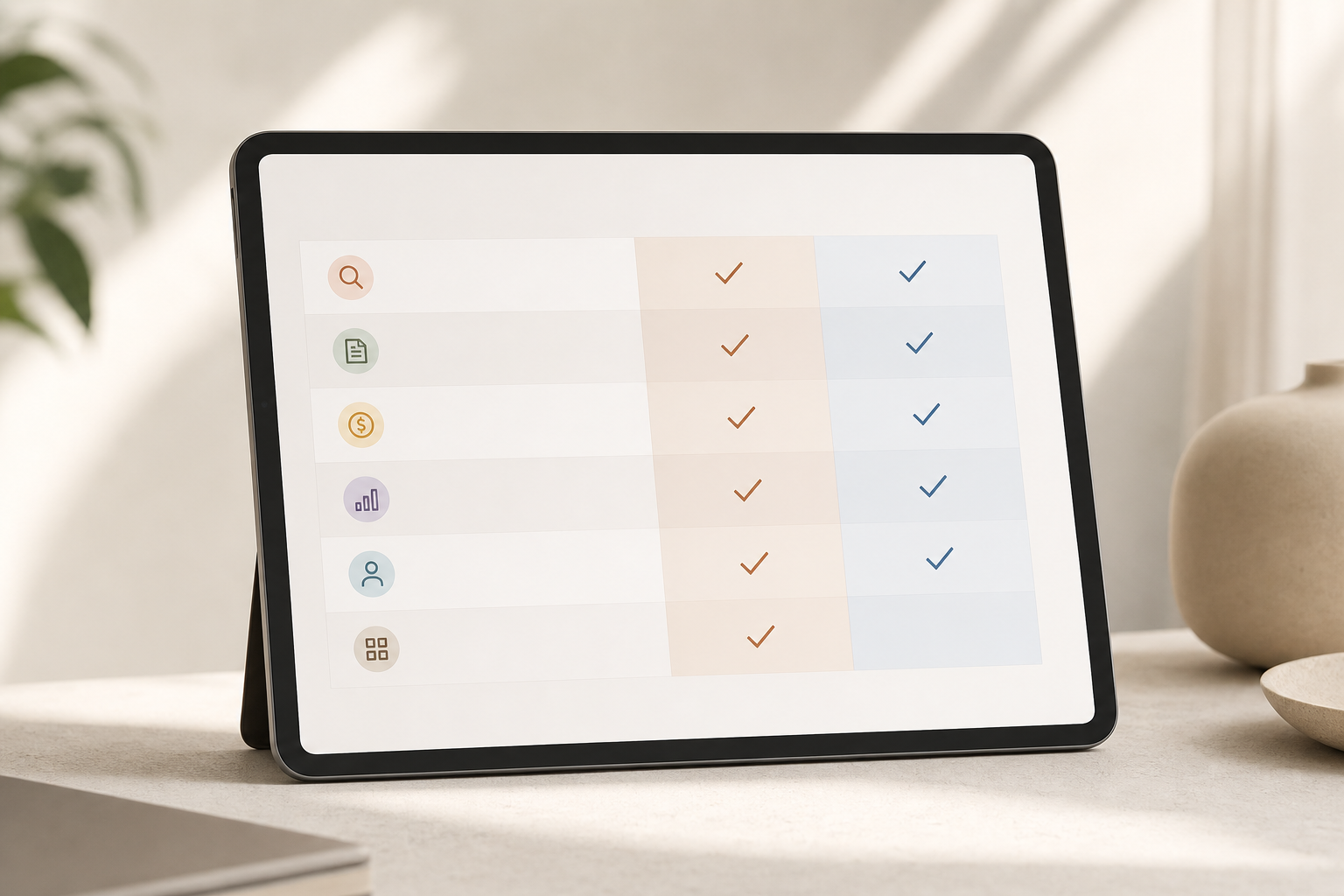
Therefore, if your biggest friction is setup and payouts, Creators Ville wins on five of six agency-focused dimensions. If store-linked attribution is your north star, Grin still holds an edge on e‑commerce depth.
Pricing Comparison: Free Entry vs Enterprise Commitment for Influencer Campaign Management
Signing up is completely free with Creators Ville. Most users are Live within 24 hours, so you can launch a paid collab or a UGC test this week without a purchase order. That matters when new clients ask for proof fast.
By contrast, Grin requires custom enterprise pricing that commonly lands at $25K+/year. There’s no free tier. For agencies with 3–10 clients that ebb and flow, a high annual commitment can squeeze margins. Moreover, you’ll spend more staff time on onboarding and process training, which adds hidden cost.
For larger portfolios anchored in Shopify and high SKU volume, the math can flip. If a single in-house-style program under your roof needs deep sales ties and CRM-style relations, the higher price may be easy to defend.
| Scenario | Creators Ville start cost | Grin start cost |
|---|---|---|
| Pilot for 1–2 clients | Free | $25K+/year |
| 3–10 active clients | Free entry; add as you grow | $25K+/year |
| One large Shopify program | Free entry; may need add‑ons later | $25K+/year, fits deep store ops |
Therefore, value per dollar favors Creators Ville for most agencies early on. If you expect rapid scope changes across 2026, the free entry tier helps you say “yes” without contract drag.
Verdict: Which Platform Wins for Marketing Agencies in Influencer Campaign Management?
If you prize cost control, speed to launch, and payout automation, Creators Ville is the better agency pick in 2026. It covers influencer campaign management with contracts and payouts in one flow, and most users are Live within 24 hours. On outcomes, brand work like the Olay Skincare Summer Campaign reached 1.02M views with an 84% approval rate on creator content, which shows the engine can deliver quality at scale.
Grin still wins on deep e‑commerce integrations and CRM depth. If your anchor client, or your in-house-like practice, lives in Shopify with code-driven sales, Grin’s store-level tie-ins are hard to beat. You’ll pay more and ramp longer, but that trade can make sense for a few large programs.
Ultimately, both tools can get the job done. Your decision hinges on your client mix, how you pay creators, and how much you need store-linked reporting versus flexible, cross-channel dashboards.
- Choose Creators Ville if you need fast setup, AI creator matching, and automated payouts/tax forms across many clients.
- Choose Grin if you need Shopify-level integrations and CRM-style creator relationships for one or two large brand programs.
- Consider a dual-tool stack if a single flagship client needs Grin’s store depth while the rest of your roster benefits from Creators Ville’s speed.
**Start free, launch in 24 hours →
Moreover, if you want a tactical frame for measuring results across clients, bookmark this step-by-step read: How to Track Influencer Campaign Analytics for Your Restaurant. Even if you don’t work with restaurants, the tracking logic adapts cleanly to most local and multi-location brands.